
- English
- Nederlands

Controllable Pitch Propeller (CPP) Blades for Existing Vessels
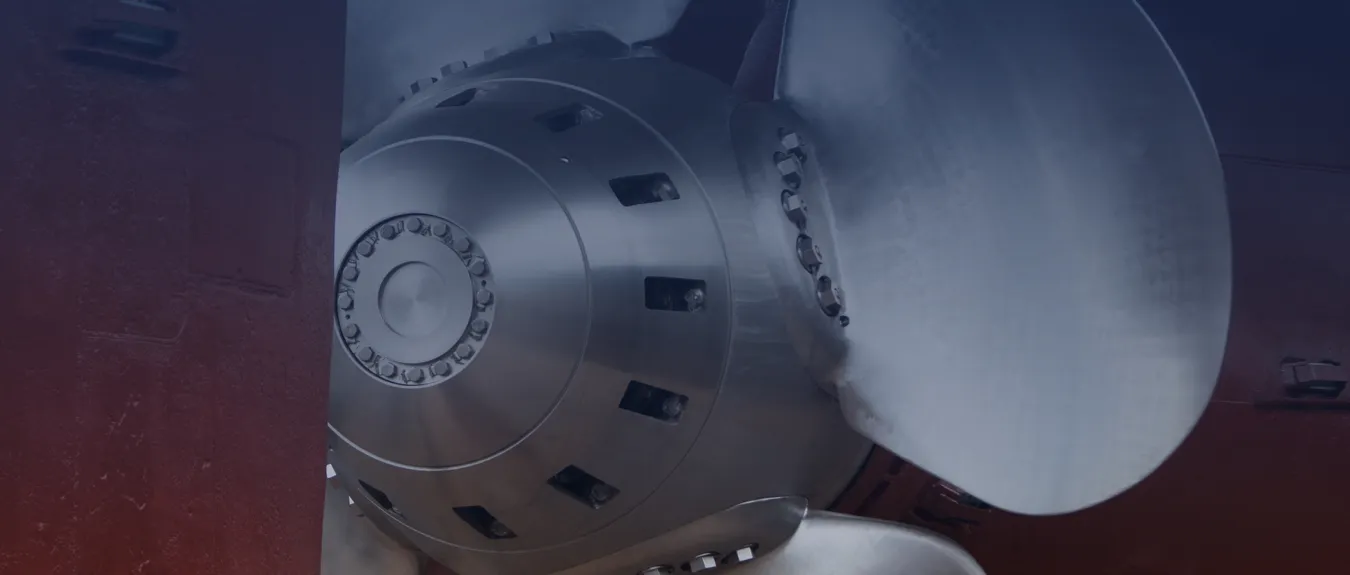
CPP blades, short for Controllable Pitch Propeller blades, are adjustable propeller blades within a CPP system of which the blade pitch can be adapted to loading conditions, manoeuvring requirements and operational profile. CPP blades influence how thrust, load absorption, manoeuvrability and fuel efficiency behave within the vessel’s overall propulsion configuration. As soon as performance, system behaviour or operational deployment no longer align logically, the technical question arises whether the existing CPP blade remains technically viable within the current installation. When that assessment remains implicit, there is a risk that an intervention is carried out at component level without resolving the underlying system limitation. In cooperation with our international partner, we support shipping companies, shipowners and technical managers in the technical assessment, reproduction, replacement and, where necessary, redesign or optimization of CPP blades for existing vessels, including blades from other manufacturers. Throughout the process, the technical coherence of the overall installation remains the starting point.
Available worldwide
When Does the CPP Blade Become a Technical Decision Point?
A CPP blade only becomes a technical decision point when deviations in performance, load behaviour, or manoeuvrability can no longer be logically explained through normal use, wear, damage, or existing system settings. In such situations, the blade profile can become a technically limiting factor without this immediately presenting itself as a clear component fault. It is precisely there that the question arises whether the existing CPP blade still convincingly fits within the vessel’s current configuration. As long as that question remains implicit, the risk remains that an intervention at component level appears logical while the actual limitation lies elsewhere in the system.
For shipping companies, shipowners, and technical managers, this issue often arises in retrofit projects, in the presence of performance deviations, or when existing CPP installations are operated under conditions other than those originally intended. The blade then becomes not only a component, but a technical point of departure for further decisions regarding reproduction, replacement, redesign, and, where relevant, optimization.
The technical delineation of this decision moment is further developed in Technical Design and Configuration of CPP Blades, where it becomes clear when a blade truly becomes a standalone assessment point and when a broader system analysis is technically more logical.
When Is Technical Assessment of CPP Blades Necessary?
CPP blades must be technically assessed as soon as deviations in performance, load, or manoeuvrability can no longer be unambiguously traced to a single component within the existing configuration. This may become visible through altered power absorption, a less stable load pattern, a different response to pitch adjustment, or interaction with hull and rudder that becomes less predictable under the vessel’s current operating profile.
Within a CPP system, blades do not function as isolated parts, but as integral elements working in combination with the hub, pitch mechanism, inflow conditions, and the wider propulsion configuration. As soon as one of these relationships shifts, the blade profile can have a noticeable effect on load absorption, manoeuvring behaviour, and propulsion performance. Technical assessment therefore only gains value when the blade is evaluated not in isolation, but in system context. The core question is then not only whether the blade deviates, but whether it continues to operate in line with the rest of the installation.
For Which Vessels Are CPP Blades Technically Relevant?
CPP blades are particularly relevant on vessels where operational flexibility, variable loading, and controlled manoeuvrability play a significant role within the operating profile. This applies, for example, to workboats, tugboats, offshore support vessels, fishing vessels, dredgers, passenger vessels, ferries, supply vessels, and various types of commercial vessels operating under changing operating conditions.
On such vessels, variable loading, changing draught, frequent manoeuvring, and a broad operational speed range can lead over time to a situation in which existing CPP blades no longer align as well with actual operating conditions. The CPP blade then becomes not only a replacement part, but a technically relevant element within the wider propulsion configuration.
Whether CPP blades in practice actually become the limiting component therefore depends not only on vessel type, but primarily on how the vessel is operated, loaded, and configured within its current operating profile. The combination of use, loading, and system configuration ultimately determines whether the blade continues to function logically within that application.
Performance Deviations and Blade Profile
CPP blades can become a technically limiting factor when deviations become visible in propeller loading, power absorption, response to pitch adjustment, or the flow pattern around hull and rudder. A less predictable power curve across different operating points, altered manoeuvring behaviour, or a performance pattern that no longer aligns logically with current deployment can all justify a renewed technical assessment of the blade profile.
Such signals do not automatically mean that the CPP blade itself is the cause. That is precisely why the determining factor is not the deviation in itself, but whether the existing blade profile still interacts logically with current system conditions. At that point, the issue shifts from component level to system analysis. Performance deviations only gain meaning when they are read in relation to configuration, loading, and operational use.
This validation layer is developed further in Design, Validation and Performance Assessment of CPP Blades, where it is examined in more detail when deviations genuinely point towards blade profile, system behaviour, or hydrodynamic limitations, and when additional verification, such as Computational Fluid Dynamics (CFD), provides technical value.
Reproduction of CPP Blades
Reproduction of CPP blades can be an appropriate route when existing blades are no longer mechanically or geometrically usable, while the original design configuration still aligns logically with the vessel’s current operating profile. In that case, the emphasis lies on accurately reconstructing the existing blade so that shape, profile, attachment points, and system fit are retained within the available geometric margins.
Reverse engineering often forms the technical basis, particularly where original design data is limited. The objective is not to alter the hydrodynamic design principles, but to make the existing blade reproducible within the current installation. This requires not only controlled assessment of tolerances, material properties, attachment, and fit, but also insight into how the existing blade relates to hub geometry, pitch mechanism, and the current load distribution across the propeller disc. It is precisely there that it becomes clear whether reproduction genuinely represents a preservation route, or primarily a precise repetition of a design already under pressure in practice.
Reproduction of CPP blades is therefore only technically logical when the existing design is not only reproducible, but also functionally sustainable within the vessel’s current operating profile. If the original blade logic no longer fits current loading, operating points, or deployment, the question shifts from reproducing to reconsidering.
Where the existing blade logic remains sufficiently valid and adequate reference data is available, reproduction of CPP blades can also be economically attractive compared with a new supply or replacement route through the original manufacturer. That assessment remains project-specific and depends, among other things, on reproducibility, material selection, classification requirements, and the technical scope of the project.
This boundary between preservation and redefinition is further developed in Service Life, Retrofit and Compliance of CPP Blades, where it becomes clear when reproducibility is substantiated strongly enough and when a project begins in substance to shift towards replacement or redesign.
Replacement Within Existing Installations
Replacement of CPP blades becomes relevant when wear, damage, or material degradation affects operational behaviour, or when system reliability comes under pressure. In such cases, replacing one or more blades may be technically feasible, provided that the remainder of the installation continues to operate within the same technical margins.
Technical feasibility depends not only on dimensions or attachment, but also on the extent to which the new blade remains compatible with the existing hub, fit, mass, profile distribution, and the way in which the system responds under load. Deviations at that level can affect load distribution, mechanical loading, and the predictability of overall propulsion behaviour. In practice, this concerns not only whether the blade physically fits, but whether the new blade continues to follow the same system logic during pitch adjustment, load build-up, and transition between representative operating points. As soon as that coherence is lacking, a formally fitting blade can still produce behaviour that cannot be properly justified within the existing configuration.
Replacement of CPP blades is therefore not a separate component choice, but a project-specific system question in which technical compatibility outweighs formal interchangeability alone. Replacement is only defensible when the functional logic of the existing configuration remains intact and the new blade also remains technically appropriate within the current application.
Redesign and Optimization
Redesign of CPP blades comes into consideration when the existing blade profile no longer aligns logically with the vessel’s current operating profile, for example due to changed routes, loading patterns, operational requirements, or a different intensity of use than originally intended. In such situations, the original design may remain usable, but fit current practical conditions less well from a technical perspective.
Analysis using Computational Fluid Dynamics (CFD) can help clarify the hydrodynamic behaviour of the existing blade within the current configuration. This creates insight into flow patterns, load distribution, and potential loss mechanisms without immediately assuming reproduction or replacement. It becomes visible whether the technical cause truly lies in the blade profile or arises elsewhere within the configuration. The added value lies not only in signalling a deviation, but also in identifying the point at which the existing blade logic begins to lose validity within inflow conditions, pitch range, load development, and interaction with the rest of the propulsion system.
When CFD-optimized new CPP blades are considered, this may be relevant not only from a hydrodynamic performance perspective, but also in terms of energy efficiency and fuel consumption across the vessel’s actual operating profile. Depending on the existing configuration, operational loading, and representative operating conditions, such a trajectory may contribute to a more favourable technical position within broader considerations related to the Energy Efficiency Existing Ship Index (EEXI), the Carbon Intensity Indicator (CII), FuelEU Maritime, and the European Union Emissions Trading System (EU ETS). That contribution must, however, always be assessed on a project-specific basis and does not follow automatically from redesign or optimization alone.
Optimization of CPP blades only becomes relevant when deviations continue to recur under comparable operating conditions and can no longer be convincingly explained from the existing configuration alone. Redesign then does not follow from a general wish to improve, but from the technical determination that the existing blade profile no longer aligns adequately with the vessel’s current operating profile, loading, and intended installation behaviour.
Material Selection and Structural Considerations
CPP blades are generally manufactured from materials such as aluminium bronze or stainless steel, depending on loading, corrosion environment, design assumptions, and the technical requirements of the installation. Material selection affects not only strength and wear resistance, but also the way in which the blade responds to long-term loading, stress variation, and operation under changing conditions.
In reproduction or replacement, the chosen material must remain appropriate for the existing system configuration and for the requirements of the relevant classification society. Material therefore cannot be separated from load profile, service life expectations, available margins, and the technical coherence of the installation. This concerns not only strength in general terms, but also the relationship between mass, stiffness, corrosion behaviour, and structural margins relative to the existing hub, attachment, and operational load variation. Material selection therefore directly affects reproducibility, integration, and the predictability of system behaviour over longer service life.
The degree of freedom here does not primarily lie in material preference, but in the extent to which a material remains technically justifiable and acceptable from a classification perspective within the existing installation. Material selection thereby becomes not a standalone product specification, but a bounded system choice.
Assessment Within System Context
CPP blades can only be properly assessed when they are read within the vessel’s total propulsion configuration. A performance deviation may become visible in the blade, while the actual cause lies in inflow conditions, hull interaction, load distribution, pitch settings, or changes in the vessel’s operating profile.
In practice, analysis of CPP blades therefore regularly leads to a broader system assessment, including the hub, pitch control, and operational parameters. This prevents selection of an intervention that appears locally logical but has insufficient system effect or leaves the actual cause untouched. That broader reading becomes particularly important where several smaller deviations reinforce one another without any single component presenting itself as a clear primary cause. Only then does it become visible whether the blade is truly the limiting factor, or whether the blade is mainly responding to a shift that has arisen elsewhere in the configuration.
The core technical question is therefore not only whether a CPP blade is damaged or worn, but above all whether the existing blade still functions logically within the vessel’s overall propulsion configuration. Only from that question does it become clear whether reproduction, replacement, or redesign is genuinely the correct route.
Controllable Pitch Propeller (CPP) Blades for Existing Vessels
In cooperation with our international partner, we support shipping companies, shipowners, and technical managers in the technical assessment, reproduction, replacement, and, where necessary, redesign or optimization of CPP blades for existing vessels, including blades from other manufacturers. Throughout the process, the technical coherence of the overall installation remains the starting point.
Available worldwide
What Are Controllable Pitch Propeller (CPP) Blades?
CPP blades, short for Controllable Pitch Propeller blades, are adjustable propeller blades within a CPP system of which the blade pitch can be adapted to loading conditions, manoeuvring requirements and operational profile.
CPP blades influence how thrust, load absorption, manoeuvrability and fuel efficiency behave within the vessel’s overall propulsion configuration.
As soon as performance, system behaviour or operational deployment no longer align logically, the technical question arises whether the existing CPP blade remains technically viable within the current installation.
When that assessment remains implicit, there is a risk that an intervention is carried out at component level without resolving the underlying system limitation.
When Does the CPP Blade Become a Technical Decision Point?
A CPP blade only becomes a technical decision point when deviations in performance, load behaviour, or manoeuvrability can no longer be logically explained through normal use, wear, damage, or existing system settings. In such situations, the blade profile can become a technically limiting factor without this immediately presenting itself as a clear component fault. It is precisely there that the question arises whether the existing CPP blade still convincingly fits within the vessel’s current configuration. As long as that question remains implicit, the risk remains that an intervention at component level appears logical while the actual limitation lies elsewhere in the system.
For shipping companies, shipowners, and technical managers, this issue often arises in retrofit projects, in the presence of performance deviations, or when existing CPP installations are operated under conditions other than those originally intended. The blade then becomes not only a component, but a technical point of departure for further decisions regarding reproduction, replacement, redesign, and, where relevant, optimization.
The technical delineation of this decision moment is further developed in Technical Design and Configuration of CPP Blades, where it becomes clear when a blade truly becomes a standalone assessment point and when a broader system analysis is technically more logical.
When Is Technical Assessment of CPP Blades Necessary?
CPP blades must be technically assessed as soon as deviations in performance, load, or manoeuvrability can no longer be unambiguously traced to a single component within the existing configuration. This may become visible through altered power absorption, a less stable load pattern, a different response to pitch adjustment, or interaction with hull and rudder that becomes less predictable under the vessel’s current operating profile.
Within a CPP system, blades do not function as isolated parts, but as integral elements working in combination with the hub, pitch mechanism, inflow conditions, and the wider propulsion configuration. As soon as one of these relationships shifts, the blade profile can have a noticeable effect on load absorption, manoeuvring behaviour, and propulsion performance. Technical assessment therefore only gains value when the blade is evaluated not in isolation, but in system context. The core question is then not only whether the blade deviates, but whether it continues to operate in line with the rest of the installation.
For Which Vessels Are CPP Blades Technically Relevant?
CPP blades are particularly relevant on vessels where operational flexibility, variable loading, and controlled manoeuvrability play a significant role within the operating profile. This applies, for example, to workboats, tugboats, offshore support vessels, fishing vessels, dredgers, passenger vessels, ferries, supply vessels, and various types of commercial vessels operating under changing operating conditions.
On such vessels, variable loading, changing draught, frequent manoeuvring, and a broad operational speed range can lead over time to a situation in which existing CPP blades no longer align as well with actual operating conditions. The CPP blade then becomes not only a replacement part, but a technically relevant element within the wider propulsion configuration.
Whether CPP blades in practice actually become the limiting component therefore depends not only on vessel type, but primarily on how the vessel is operated, loaded, and configured within its current operating profile. The combination of use, loading, and system configuration ultimately determines whether the blade continues to function logically within that application.
Performance Deviations and Blade Profile
CPP blades can become a technically limiting factor when deviations become visible in propeller loading, power absorption, response to pitch adjustment, or the flow pattern around hull and rudder. A less predictable power curve across different operating points, altered manoeuvring behaviour, or a performance pattern that no longer aligns logically with current deployment can all justify a renewed technical assessment of the blade profile.
Such signals do not automatically mean that the CPP blade itself is the cause. That is precisely why the determining factor is not the deviation in itself, but whether the existing blade profile still interacts logically with current system conditions. At that point, the issue shifts from component level to system analysis. Performance deviations only gain meaning when they are read in relation to configuration, loading, and operational use.
This validation layer is developed further in Design, Validation and Performance Assessment of CPP Blades, where it is examined in more detail when deviations genuinely point towards blade profile, system behaviour, or hydrodynamic limitations, and when additional verification, such as Computational Fluid Dynamics (CFD), provides technical value.
Reproduction of CPP Blades
Reproduction of CPP blades can be an appropriate route when existing blades are no longer mechanically or geometrically usable, while the original design configuration still aligns logically with the vessel’s current operating profile. In that case, the emphasis lies on accurately reconstructing the existing blade so that shape, profile, attachment points, and system fit are retained within the available geometric margins.
Reverse engineering often forms the technical basis, particularly where original design data is limited. The objective is not to alter the hydrodynamic design principles, but to make the existing blade reproducible within the current installation. This requires not only controlled assessment of tolerances, material properties, attachment, and fit, but also insight into how the existing blade relates to hub geometry, pitch mechanism, and the current load distribution across the propeller disc. It is precisely there that it becomes clear whether reproduction genuinely represents a preservation route, or primarily a precise repetition of a design already under pressure in practice.
Reproduction of CPP blades is therefore only technically logical when the existing design is not only reproducible, but also functionally sustainable within the vessel’s current operating profile. If the original blade logic no longer fits current loading, operating points, or deployment, the question shifts from reproducing to reconsidering.
Where the existing blade logic remains sufficiently valid and adequate reference data is available, reproduction of CPP blades can also be economically attractive compared with a new supply or replacement route through the original manufacturer. That assessment remains project-specific and depends, among other things, on reproducibility, material selection, classification requirements, and the technical scope of the project.
This boundary between preservation and redefinition is further developed in Service Life, Retrofit and Compliance of CPP Blades, where it becomes clear when reproducibility is substantiated strongly enough and when a project begins in substance to shift towards replacement or redesign.
Replacement Within Existing Installations
Replacement of CPP blades becomes relevant when wear, damage, or material degradation affects operational behaviour, or when system reliability comes under pressure. In such cases, replacing one or more blades may be technically feasible, provided that the remainder of the installation continues to operate within the same technical margins.
Technical feasibility depends not only on dimensions or attachment, but also on the extent to which the new blade remains compatible with the existing hub, fit, mass, profile distribution, and the way in which the system responds under load. Deviations at that level can affect load distribution, mechanical loading, and the predictability of overall propulsion behaviour. In practice, this concerns not only whether the blade physically fits, but whether the new blade continues to follow the same system logic during pitch adjustment, load build-up, and transition between representative operating points. As soon as that coherence is lacking, a formally fitting blade can still produce behaviour that cannot be properly justified within the existing configuration.
Replacement of CPP blades is therefore not a separate component choice, but a project-specific system question in which technical compatibility outweighs formal interchangeability alone. Replacement is only defensible when the functional logic of the existing configuration remains intact and the new blade also remains technically appropriate within the current application.
Redesign and Optimization
Redesign of CPP blades comes into consideration when the existing blade profile no longer aligns logically with the vessel’s current operating profile, for example due to changed routes, loading patterns, operational requirements, or a different intensity of use than originally intended. In such situations, the original design may remain usable, but fit current practical conditions less well from a technical perspective.
Analysis using Computational Fluid Dynamics (CFD) can help clarify the hydrodynamic behaviour of the existing blade within the current configuration. This creates insight into flow patterns, load distribution, and potential loss mechanisms without immediately assuming reproduction or replacement. It becomes visible whether the technical cause truly lies in the blade profile or arises elsewhere within the configuration. The added value lies not only in signalling a deviation, but also in identifying the point at which the existing blade logic begins to lose validity within inflow conditions, pitch range, load development, and interaction with the rest of the propulsion system.
When CFD-optimized new CPP blades are considered, this may be relevant not only from a hydrodynamic performance perspective, but also in terms of energy efficiency and fuel consumption across the vessel’s actual operating profile. Depending on the existing configuration, operational loading, and representative operating conditions, such a trajectory may contribute to a more favourable technical position within broader considerations related to the Energy Efficiency Existing Ship Index (EEXI), the Carbon Intensity Indicator (CII), FuelEU Maritime, and the European Union Emissions Trading System (EU ETS). That contribution must, however, always be assessed on a project-specific basis and does not follow automatically from redesign or optimization alone.
Optimization of CPP blades only becomes relevant when deviations continue to recur under comparable operating conditions and can no longer be convincingly explained from the existing configuration alone. Redesign then does not follow from a general wish to improve, but from the technical determination that the existing blade profile no longer aligns adequately with the vessel’s current operating profile, loading, and intended installation behaviour.
Material Selection and Structural Considerations
CPP blades are generally manufactured from materials such as aluminium bronze or stainless steel, depending on loading, corrosion environment, design assumptions, and the technical requirements of the installation. Material selection affects not only strength and wear resistance, but also the way in which the blade responds to long-term loading, stress variation, and operation under changing conditions.
In reproduction or replacement, the chosen material must remain appropriate for the existing system configuration and for the requirements of the relevant classification society. Material therefore cannot be separated from load profile, service life expectations, available margins, and the technical coherence of the installation. This concerns not only strength in general terms, but also the relationship between mass, stiffness, corrosion behaviour, and structural margins relative to the existing hub, attachment, and operational load variation. Material selection therefore directly affects reproducibility, integration, and the predictability of system behaviour over longer service life.
The degree of freedom here does not primarily lie in material preference, but in the extent to which a material remains technically justifiable and acceptable from a classification perspective within the existing installation. Material selection thereby becomes not a standalone product specification, but a bounded system choice.
Assessment Within System Context
CPP blades can only be properly assessed when they are read within the vessel’s total propulsion configuration. A performance deviation may become visible in the blade, while the actual cause lies in inflow conditions, hull interaction, load distribution, pitch settings, or changes in the vessel’s operating profile.
In practice, analysis of CPP blades therefore regularly leads to a broader system assessment, including the hub, pitch control, and operational parameters. This prevents selection of an intervention that appears locally logical but has insufficient system effect or leaves the actual cause untouched. That broader reading becomes particularly important where several smaller deviations reinforce one another without any single component presenting itself as a clear primary cause. Only then does it become visible whether the blade is truly the limiting factor, or whether the blade is mainly responding to a shift that has arisen elsewhere in the configuration.
The core technical question is therefore not only whether a CPP blade is damaged or worn, but above all whether the existing blade still functions logically within the vessel’s overall propulsion configuration. Only from that question does it become clear whether reproduction, replacement, or redesign is genuinely the correct route.