
- English
- Nederlands

DPF Systems for Ships
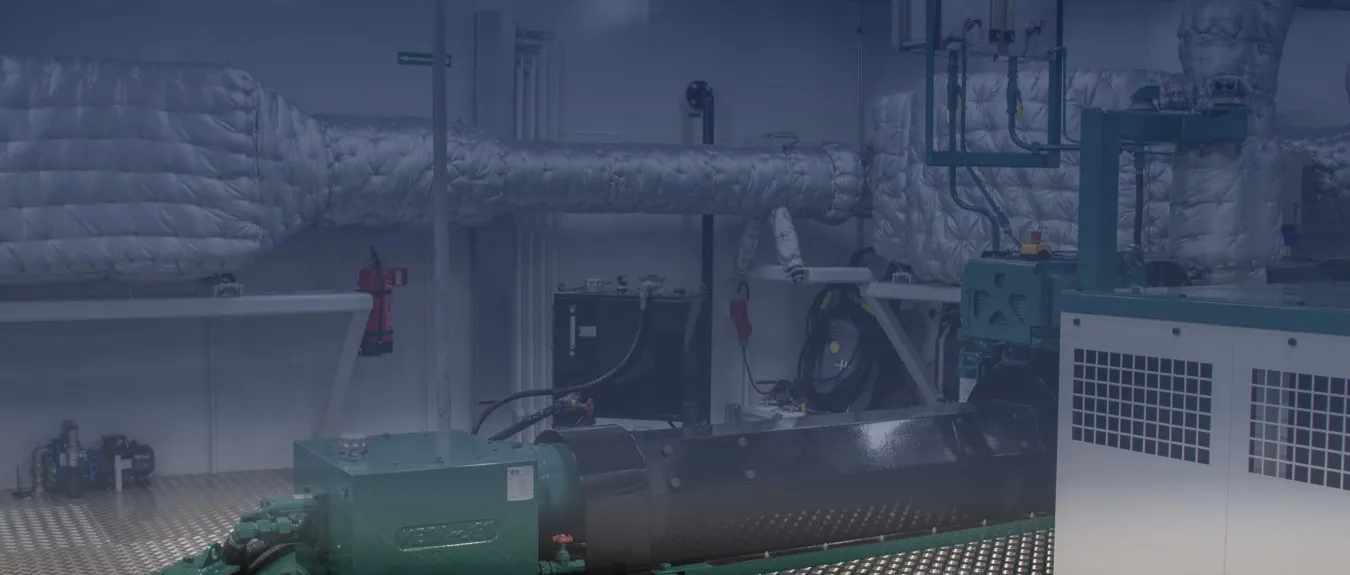
DPF systems for ships are emissions aftertreatment systems that remove particulate matter (PM) and particle number (PN) emissions from marine engine exhaust gases before they enter the atmosphere. Within shipping, DPF systems are used to improve the emissions profiles of existing and new marine engines within sustainability programmes, emissions labels, Green Award programmes, tenders and emissions frameworks such as EU Stage V. In practice, these systems, internationally also referred to as diesel particulate filter (DPF) systems, do not function as isolated filter components but as thermal emissions systems surrounding the marine engine. Regeneration behaviour, exhaust gas temperature, pressure build-up, engine load and engine room integration together determine whether stable particulate matter reduction remains achievable under real operating conditions. Especially in retrofit projects on existing marine engines, technical value only arises when regeneration, thermal stability, maintenance burden, spatial impact and access to the installation remain manageable over time during normal operation. In cooperation with our international partner, we support shipping companies, shipowners, superintendents and technical project managers in the selection, technical assessment and supply of project-specific DPF systems for retrofit and newbuild projects within inland shipping, seagoing shipping, offshore, dredging, workboats, towage, passenger vessels, fisheries, defence, cruise shipping and megayacht construction.
Available worldwide
What Is a DPF System for Ships?
Within shipping, a DPF system for ships is not assessed as an isolated filter component, but as an integrated emissions system surrounding the marine engine. Particulate matter capture, thermal load, regeneration and daily operation must remain continuously balanced.
That system relationship becomes particularly visible once existing engines continue operating under varying load. Unlike many stationary installations, marine engines are exposed to manoeuvring operation, part load, variable power demand and prolonged load variations. As a result, the assessment shifts from particulate matter reduction alone to whether the system can continue functioning stably under real operating conditions.
For shipping companies, technical managers and superintendents, this usually does not create a choice between “filter” and “no filter”, but between different forms of emissions aftertreatment with different consequences for maintenance burden, regeneration behaviour, engine room integration and reliability on board. It is precisely here that it becomes clear whether a DPF system merely reduces emissions technically or also remains manageable over the long term within the vessel’s operating profile.
How Does a DPF System Work on a Ship?
A DPF system captures particulate matter from exhaust gases before they leave the atmosphere. During operation, soot particles accumulate in the filter material, gradually loading the system. To prevent blockage and increasing backpressure, the filter must regenerate periodically, during which accumulated soot is thermally oxidized.
In shipping, that regeneration process often determines the practical reliability of the installation. A filter only continues to function stably when exhaust gas temperature is high enough to allow regeneration to proceed in a controlled manner. During prolonged part-load operation or varying load, that temperature may fall too far. Regeneration then becomes incomplete or the filter fouls more rapidly.
In practice, this is often where the difference lies between a technically suitable filter and an operationally stable emissions system. A DPF system may theoretically be suitable for the engine configuration, while the installation may still fail to retain sufficient thermal stability for long-term emissions reduction under the actual operating profile. At that point, the assessment shifts from filter capacity to thermal manageability of the complete emissions chain.
How Do Self-Cleaning DPF Systems Function Under Varying Load?
Self-cleaning DPF systems are developed to break down accumulated particulate matter through regeneration without the filter requiring manual cleaning during normal operation. In shipping, that self-cleaning function depends strongly on engine load, exhaust gas temperature and the actual operating profile.
Regeneration may occur passively or be actively supported. During passive regeneration, exhaust gas temperature and operating conditions provide sufficient heat to break down accumulated soot. During active regeneration, additional thermal support is required, for example through a burner or an adjusted control strategy. Especially during prolonged part-load operation, idling or low exhaust gas temperatures, that choice becomes decisive for the reliability of the DPF system.
Under sufficient thermal load, regeneration can proceed relatively stably. During prolonged part-load operation or strongly varying load, the risk of incomplete regeneration, increasing backpressure and additional fouling of the filter element increases. A self-cleaning DPF is therefore not assessed only on filter capacity, but above all on whether the installation can keep itself clean under daily operating conditions.
Especially in retrofit projects involving existing inland waterway engines, generator sets, workboats and dredgers, this creates an important distinction between theoretical emissions reduction and practical deployability. From that technical basis, the analysis then shifts towards regeneration stability, maintenance burden and thermal reserve under actual vessel operation.
Why Does Part Load Create a Risk for DPF Systems?
Part load lowers the exhaust gas temperature of marine engines, making regeneration of the DPF less stable. Especially within inland shipping, workboats, towage and dredging, engines regularly operate outside their optimal thermal load range.
When exhaust gas temperature remains too low for prolonged periods, accumulated particulate matter can build up in the filter faster than the system can regenerate it thermally. This increases pressure loss and raises the risk of fouling, power loss or unplanned maintenance intervals.
That risk becomes particularly visible on vessels with strongly varying power demand or prolonged idling. The emissions system must then not only reduce particulate matter, but also retain sufficient thermal margin to keep the filter clean and stable under real operating conditions. Only then does the question arise whether long-term emissions reduction remains operationally sustainable without disproportionate maintenance burden or additional thermal support.
When Does a DPF System Become Thermally Unstable?
Thermal instability arises when regeneration, heat management and particulate matter loading no longer remain balanced within the exhaust gas path. That risk increases once the operating profile provides insufficient stable exhaust gas energy for controlled regeneration.
In practice, this can develop in two directions. The filter regenerates too little, causing fouling and backpressure to increase, or temperature peaks and local overheating occur. In that case, not only the filter is affected, but also the immediate environment of the exhaust gas system.
For retrofit projects on existing ships, thermal stability therefore often becomes more important than theoretical filter capacity alone. A system that provides sufficient particulate matter reduction on paper may still become problematic if the thermal load does not match the vessel’s actual operating profile. The analysis therefore shifts from nominal emissions reduction to reproducible thermal stability under daily operation.
How Does Pressure Build-Up Affect the Performance of a Marine Engine?
As a DPF captures more particulate matter, pressure loss within the exhaust gas path increases. This backpressure influences flow conditions around the marine engine and can affect engine performance, fuel consumption and thermal load.
With limited fouling, that influence usually remains manageable. When regeneration is insufficiently effective, backpressure may increase more rapidly and the engine encounters greater resistance within the exhaust gas path. In practice, this may lead to less stable performance, higher thermal load and greater pressure on maintenance planning.
In maritime retrofit projects, pressure loss is therefore not assessed in isolation. It must be read in relation to engine load, exhaust gas flow rate, regeneration behaviour and the vessel’s actual use. The assessment is not limited to filter behaviour alone, but extends into the interaction between emissions system, engine load and operational deployability.
Why Does the Operating Profile Determine the Reliability of DPF Systems?
The operating profile determines how stable the thermal conditions around the DPF remain. Vessels operating for extended periods under relatively constant load generally retain more favourable conditions for regeneration than vessels with frequent load variations, idling or short work cycles.
As a result, two vessels with comparable engine outputs may in practice require completely different emissions strategies. A filter configuration that functions stably on a continuously loaded main engine is not automatically suitable for a workboat with fluctuating load or prolonged part-load operation.
Especially within retrofit projects, the operating profile therefore becomes a decisive factor for technical feasibility. Not maximum engine power, but actual use ultimately determines whether stable particulate matter reduction remains achievable over the long term. At that point, filter technology alone is no longer decisive. What matters most is the extent to which thermal behaviour and operational load continue to support one another. For a more detailed discussion of pressure monitoring, regeneration behaviour, thermal continuity and validation of real-world performance, see Performance Assessment and Validation of DPF Systems for Ships.
Why Are DPF Systems Important for PM and PN Reduction?
DPF systems are used to substantially reduce particulate matter (PM) emissions and particle number (PN) emissions from marine engines. Especially ultrafine particles and visible smoke emissions play an increasingly important role within sustainability programmes, port access and tenders.
Within inland shipping, particulate matter reduction is increasingly linked to emissions labels, Green Award programmes and client requirements. In seagoing shipping, attention is also growing for visible smoke reduction, air quality around ports and the limitation of local emissions impact, especially with older engine configurations.
As a result, DPF systems are assessed more broadly in practice than from regulation alone. The system must not only contribute to emissions compliance, but also to a cleaner emissions profile, reduced visible smoke formation and an improved emissions profile for existing vessel installations. From that technical emissions foundation, the assessment then shifts towards operational acceptance, market expectations and future deployability.
Why Do DPF Systems Reduce Visible Smoke Emissions?
Visible smoke from a ship’s exhaust often arises when soot particles and unburned particles remain present in the exhaust gas flow. A DPF system limits these emissions by capturing solid particles before the exhaust gases reach the surrounding environment.
Smoke reduction becomes particularly significant for vessels operating around ports, terminals, urban waterways, construction projects or emissions-sensitive work areas. Reduced visible smoke supports not only technical emissions performance, but also acceptance by clients, ports, regulators and surrounding stakeholders.
This layer becomes particularly important with existing marine engines that are still technically usable but whose visible emissions profile no longer aligns with modern sustainability expectations. In such situations, particulate matter reduction can contribute to a cleaner emissions profile without immediate engine replacement having to be the first step.
Even outside direct emissions legislation, pressure to reduce visible smoke, particulate matter emissions and local emissions impact is therefore increasing. Ports, urban waterways, public-sector clients and tender processes are placing greater emphasis on cleaner emissions profiles. As a result, DPF systems are becoming more relevant not only technically, but also commercially for future deployability. It is precisely here that it becomes visible whether emissions reduction remains solely a technical improvement or also gains strategic value within future market access and sustainability pressure.
When Do SCR Systems and DPF Systems Become Operationally Dependent on One Another?
As soon as a vessel requires both NOx reduction and particulate matter reduction, SCR systems and DPF systems become parts of the same emissions chain. In such configurations, temperature profile, pressure loss and regeneration behaviour directly influence one another within the same exhaust gas line.
A temperature range that is favourable for NOx conversion within an SCR system, for example, is not automatically optimal for regeneration of the DPF. This creates a technical balance in which both emissions technologies must continue to function stably under real operating conditions without disrupting one another thermally or operationally.
Especially within compact engine rooms, that system interaction can become decisive for retrofit feasibility. It is not the individual components, but the stability of the combined emissions treatment that determines whether long-term emissions reduction remains technically defensible. The technical assessment therefore shifts from individual emissions technologies to reproducible system behaviour of the complete emissions chain.
Why Does DPF Retrofit Require a Project-Specific Approach?
DPF retrofit does not begin with the filter component itself, but with the existing thermal, spatial and operational characteristics of the vessel. Engine load, exhaust gas temperature, available space, pipework configuration, weight, thermal insulation, fire safety and maintenance access together determine whether a filter system can be integrated stably.
For existing inland waterway engines with pre-CCR, CCR-1 or CCR-2 classification, available space is often limited. Especially in older engine rooms, additional emissions technology must be integrated without placing maintenance accessibility, the exhaust gas path or thermal manageability under pressure. Combinations of DPF systems and SCR systems make that physical integration more sensitive because filter housings, pipework, sensors, possible bypass paths and thermal protection must fit within the same engine room environment.
For that reason, retrofit almost always requires project-specific assessment of the exhaust gas path rather than standard selection of a single filter type. Feasibility is determined not only by emissions reduction, but by whether the installation remains safe, accessible, thermally manageable and maintainable under real operating conditions. Only then does the question arise whether retrofit also remains economically and operationally sustainable throughout the remaining service life of the vessel. For a more detailed discussion of technical integration issues involving engine room integration, emissions architecture, thermal manageability and retrofit assessment, see Technical Configuration and System Integration of DPF Systems for Ships.
Maintenance and Regeneration of DPF Systems
Maintenance of DPF systems largely revolves around controlling regeneration behaviour, fouling and pressure build-up. Once regeneration becomes less stable, the likelihood of filter element fouling, increasing backpressure and reduced emissions performance rises.
For technical managers, trend monitoring therefore becomes particularly important. Temperature development, pressure differentials, regeneration frequency and engine load together provide insight into the condition of the system.
A minor deviation does not have to be critical immediately. In practice, however, such a signal may indicate that the emissions system is beginning to operate outside its optimal range. Early interpretation prevents maintenance from becoming visible only once performance or availability is already under pressure. The assessment therefore shifts from incidental maintenance actions to the reproducibility of emissions performance under long-term operation. For a more detailed discussion of service life, maintenance burden, backpressure development, emissions compliance and long-term manageability of DPF systems, see Service Life, Retrofit and Emissions Compliance of DPF Systems for Ships.
DPF Systems Within Green Award, EU Stage V and Sustainability Programmes
In inland shipping, DPF systems are regularly applied within sustainability programmes related to Green Award, emissions labels, tenders and EU Stage V-related emissions objectives. Especially existing marine engines with higher particulate matter emissions can therefore remain technically attractive within future deployment conditions.
Green Award programmes can make the combination of DPF systems and SCR systems especially relevant. A stronger emissions profile can also influence tenders, port-related benefits and commercial deployability.
For EU Stage V, reduction of particulate matter (PM) and particle number (PN) plays a central role. In practice, DPF systems are therefore often combined with SCR systems to reduce both particulate matter and NOx emissions.
Within retrofit projects involving particulate matter reduction, visible smoke reduction and the sustainability improvement of existing vessel installations, schemes such as the Environmental Investment Allowance (MIA) and Random Depreciation of Environmental Investments (Vamil) may also become relevant, depending on project structure and applicable conditions. In addition, emissions-related incentive programmes, port-related sustainability initiatives and European decarbonization projects may be considered in the technical and economic feasibility of DPF systems within existing fleet renewal programmes.
In seagoing shipping, a broader trend is emerging at the same time: visible smoke and particulate matter are increasingly becoming part of sustainability policy, commercial deployability and emissions strategy, even where regulation does not directly require it. While IMO Tier III focuses primarily on NOx reduction, particulate matter reduction through DPF systems may still become relevant when clients, ports or project environments require cleaner emissions profiles. The analysis therefore shifts from emissions compliance alone to the strategic position of existing vessel installations within future sustainability frameworks. For a more detailed discussion of investment considerations, commercial deployability, fiscal incentives and the strategic choice between retrofit and engine replacement, see Economic Considerations and Strategic Decision-Making Around DPF Systems for Ships.
DPF Systems for Ships
In cooperation with our international partner, we support shipping companies, shipowners, superintendents and technical project managers in the selection, technical assessment and supply of project-specific DPF systems for retrofit and newbuild projects within inland shipping, seagoing shipping, offshore, dredging, workboats, towage, passenger vessels, fisheries, defence, cruise shipping and megayacht construction.
Available worldwide
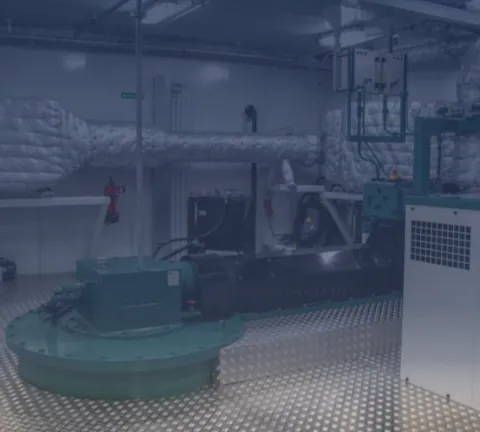
What Is a DPF System for Ships?
DPF systems for ships are emissions aftertreatment systems that remove particulate matter (PM) and particle number (PN) emissions from marine engine exhaust gases before they enter the atmosphere.
Within shipping, DPF systems are used to improve the emissions profiles of existing and new marine engines within sustainability programmes, emissions labels, Green Award programmes, tenders and emissions frameworks such as EU Stage V.
In practice, these systems, internationally also referred to as diesel particulate filter (DPF) systems, do not function as isolated filter components but as thermal emissions systems surrounding the marine engine.
Regeneration behaviour, exhaust gas temperature, pressure build-up, engine load and engine room integration together determine whether stable particulate matter reduction remains achievable under real operating conditions.
Especially in retrofit projects on existing marine engines, technical value only arises when regeneration, thermal stability, maintenance burden, spatial impact and access to the installation remain manageable over time during normal operation.
Within shipping, a DPF system for ships is not assessed as an isolated filter component, but as an integrated emissions system surrounding the marine engine.
Particulate matter capture, thermal load, regeneration and daily operation must remain continuously balanced.
That system relationship becomes particularly visible once existing engines continue operating under varying load.
Unlike many stationary installations, marine engines are exposed to manoeuvring operation, part load, variable power demand and prolonged load variations.
As a result, the assessment shifts from particulate matter reduction alone to whether the system can continue functioning stably under real operating conditions.
For shipping companies, technical managers and superintendents, this usually does not create a choice between “filter” and “no filter”, but between different forms of emissions aftertreatment with different consequences for maintenance burden, regeneration behaviour, engine room integration and reliability on board.
It is precisely here that it becomes clear whether a DPF system merely reduces emissions technically or also remains manageable over the long term within the vessel’s operating profile.
How Does a DPF System Work on a Ship?
A DPF system captures particulate matter from exhaust gases before they leave the atmosphere. During operation, soot particles accumulate in the filter material, gradually loading the system. To prevent blockage and increasing backpressure, the filter must regenerate periodically, during which accumulated soot is thermally oxidized.
In shipping, that regeneration process often determines the practical reliability of the installation. A filter only continues to function stably when exhaust gas temperature is high enough to allow regeneration to proceed in a controlled manner. During prolonged part-load operation or varying load, that temperature may fall too far. Regeneration then becomes incomplete or the filter fouls more rapidly.
In practice, this is often where the difference lies between a technically suitable filter and an operationally stable emissions system. A DPF system may theoretically be suitable for the engine configuration, while the installation may still fail to retain sufficient thermal stability for long-term emissions reduction under the actual operating profile. At that point, the assessment shifts from filter capacity to thermal manageability of the complete emissions chain.
How Do Self-Cleaning DPF Systems Function Under Varying Load?
Self-cleaning DPF systems are developed to break down accumulated particulate matter through regeneration without the filter requiring manual cleaning during normal operation. In shipping, that self-cleaning function depends strongly on engine load, exhaust gas temperature and the actual operating profile.
Regeneration may occur passively or be actively supported. During passive regeneration, exhaust gas temperature and operating conditions provide sufficient heat to break down accumulated soot. During active regeneration, additional thermal support is required, for example through a burner or an adjusted control strategy. Especially during prolonged part-load operation, idling or low exhaust gas temperatures, that choice becomes decisive for the reliability of the DPF system.
Under sufficient thermal load, regeneration can proceed relatively stably. During prolonged part-load operation or strongly varying load, the risk of incomplete regeneration, increasing backpressure and additional fouling of the filter element increases. A self-cleaning DPF is therefore not assessed only on filter capacity, but above all on whether the installation can keep itself clean under daily operating conditions.
Especially in retrofit projects involving existing inland waterway engines, generator sets, workboats and dredgers, this creates an important distinction between theoretical emissions reduction and practical deployability. From that technical basis, the analysis then shifts towards regeneration stability, maintenance burden and thermal reserve under actual vessel operation.
Why Does Part Load Create a Risk for DPF Systems?
Part load lowers the exhaust gas temperature of marine engines, making regeneration of the DPF less stable. Especially within inland shipping, workboats, towage and dredging, engines regularly operate outside their optimal thermal load range.
When exhaust gas temperature remains too low for prolonged periods, accumulated particulate matter can build up in the filter faster than the system can regenerate it thermally. This increases pressure loss and raises the risk of fouling, power loss or unplanned maintenance intervals.
That risk becomes particularly visible on vessels with strongly varying power demand or prolonged idling. The emissions system must then not only reduce particulate matter, but also retain sufficient thermal margin to keep the filter clean and stable under real operating conditions. Only then does the question arise whether long-term emissions reduction remains operationally sustainable without disproportionate maintenance burden or additional thermal support.
When Does a DPF System Become Thermally Unstable?
Thermal instability arises when regeneration, heat management and particulate matter loading no longer remain balanced within the exhaust gas path. That risk increases once the operating profile provides insufficient stable exhaust gas energy for controlled regeneration.
In practice, this can develop in two directions. The filter regenerates too little, causing fouling and backpressure to increase, or temperature peaks and local overheating occur. In that case, not only the filter is affected, but also the immediate environment of the exhaust gas system.
For retrofit projects on existing ships, thermal stability therefore often becomes more important than theoretical filter capacity alone. A system that provides sufficient particulate matter reduction on paper may still become problematic if the thermal load does not match the vessel’s actual operating profile. The analysis therefore shifts from nominal emissions reduction to reproducible thermal stability under daily operation.
How Does Pressure Build-Up Affect the Performance of a Marine Engine?
As a DPF captures more particulate matter, pressure loss within the exhaust gas path increases. This backpressure influences flow conditions around the marine engine and can affect engine performance, fuel consumption and thermal load.
With limited fouling, that influence usually remains manageable. When regeneration is insufficiently effective, backpressure may increase more rapidly and the engine encounters greater resistance within the exhaust gas path. In practice, this may lead to less stable performance, higher thermal load and greater pressure on maintenance planning.
In maritime retrofit projects, pressure loss is therefore not assessed in isolation. It must be read in relation to engine load, exhaust gas flow rate, regeneration behaviour and the vessel’s actual use. The assessment is not limited to filter behaviour alone, but extends into the interaction between emissions system, engine load and operational deployability.
Why Does the Operating Profile Determine the Reliability of DPF Systems?
The operating profile determines how stable the thermal conditions around the DPF remain. Vessels operating for extended periods under relatively constant load generally retain more favourable conditions for regeneration than vessels with frequent load variations, idling or short work cycles.
As a result, two vessels with comparable engine outputs may in practice require completely different emissions strategies. A filter configuration that functions stably on a continuously loaded main engine is not automatically suitable for a workboat with fluctuating load or prolonged part-load operation.
Especially within retrofit projects, the operating profile therefore becomes a decisive factor for technical feasibility. Not maximum engine power, but actual use ultimately determines whether stable particulate matter reduction remains achievable over the long term. At that point, filter technology alone is no longer decisive. What matters most is the extent to which thermal behaviour and operational load continue to support one another. For a more detailed discussion of pressure monitoring, regeneration behaviour, thermal continuity and validation of real-world performance, see Performance Assessment and Validation of DPF Systems for Ships.
Why Are DPF Systems Important for PM and PN Reduction?
DPF systems are used to substantially reduce particulate matter (PM) emissions and particle number (PN) emissions from marine engines. Especially ultrafine particles and visible smoke emissions play an increasingly important role within sustainability programmes, port access and tenders.
Within inland shipping, particulate matter reduction is increasingly linked to emissions labels, Green Award programmes and client requirements. In seagoing shipping, attention is also growing for visible smoke reduction, air quality around ports and the limitation of local emissions impact, especially with older engine configurations.
As a result, DPF systems are assessed more broadly in practice than from regulation alone. The system must not only contribute to emissions compliance, but also to a cleaner emissions profile, reduced visible smoke formation and an improved emissions profile for existing vessel installations. From that technical emissions foundation, the assessment then shifts towards operational acceptance, market expectations and future deployability.
Why Do DPF Systems Reduce Visible Smoke Emissions?
Visible smoke from a ship’s exhaust often arises when soot particles and unburned particles remain present in the exhaust gas flow. A DPF system limits these emissions by capturing solid particles before the exhaust gases reach the surrounding environment.
Smoke reduction becomes particularly significant for vessels operating around ports, terminals, urban waterways, construction projects or emissions-sensitive work areas. Reduced visible smoke supports not only technical emissions performance, but also acceptance by clients, ports, regulators and surrounding stakeholders.
This layer becomes particularly important with existing marine engines that are still technically usable but whose visible emissions profile no longer aligns with modern sustainability expectations. In such situations, particulate matter reduction can contribute to a cleaner emissions profile without immediate engine replacement having to be the first step.
Even outside direct emissions legislation, pressure to reduce visible smoke, particulate matter emissions and local emissions impact is therefore increasing. Ports, urban waterways, public-sector clients and tender processes are placing greater emphasis on cleaner emissions profiles. As a result, DPF systems are becoming more relevant not only technically, but also commercially for future deployability. It is precisely here that it becomes visible whether emissions reduction remains solely a technical improvement or also gains strategic value within future market access and sustainability pressure.
When Do SCR Systems and DPF Systems Become Operationally Dependent on One Another?
As soon as a vessel requires both NOx reduction and particulate matter reduction, SCR systems and DPF systems become parts of the same emissions chain. In such configurations, temperature profile, pressure loss and regeneration behaviour directly influence one another within the same exhaust gas line.
A temperature range that is favourable for NOx conversion within an SCR system, for example, is not automatically optimal for regeneration of the DPF. This creates a technical balance in which both emissions technologies must continue to function stably under real operating conditions without disrupting one another thermally or operationally.
Especially within compact engine rooms, that system interaction can become decisive for retrofit feasibility. It is not the individual components, but the stability of the combined emissions treatment that determines whether long-term emissions reduction remains technically defensible. The technical assessment therefore shifts from individual emissions technologies to reproducible system behaviour of the complete emissions chain.
Why Does DPF Retrofit Require a Project-Specific Approach?
DPF retrofit does not begin with the filter component itself, but with the existing thermal, spatial and operational characteristics of the vessel. Engine load, exhaust gas temperature, available space, pipework configuration, weight, thermal insulation, fire safety and maintenance access together determine whether a filter system can be integrated stably.
For existing inland waterway engines with pre-CCR, CCR-1 or CCR-2 classification, available space is often limited. Especially in older engine rooms, additional emissions technology must be integrated without placing maintenance accessibility, the exhaust gas path or thermal manageability under pressure. Combinations of DPF systems and SCR systems make that physical integration more sensitive because filter housings, pipework, sensors, possible bypass paths and thermal protection must fit within the same engine room environment.
For that reason, retrofit almost always requires project-specific assessment of the exhaust gas path rather than standard selection of a single filter type. Feasibility is determined not only by emissions reduction, but by whether the installation remains safe, accessible, thermally manageable and maintainable under real operating conditions. Only then does the question arise whether retrofit also remains economically and operationally sustainable throughout the remaining service life of the vessel. For a more detailed discussion of technical integration issues involving engine room integration, emissions architecture, thermal manageability and retrofit assessment, see Technical Configuration and System Integration of DPF Systems for Ships.
Maintenance and Regeneration of DPF Systems
Maintenance of DPF systems largely revolves around controlling regeneration behaviour, fouling and pressure build-up. Once regeneration becomes less stable, the likelihood of filter element fouling, increasing backpressure and reduced emissions performance rises.
For technical managers, trend monitoring therefore becomes particularly important. Temperature development, pressure differentials, regeneration frequency and engine load together provide insight into the condition of the system.
A minor deviation does not have to be critical immediately. In practice, however, such a signal may indicate that the emissions system is beginning to operate outside its optimal range. Early interpretation prevents maintenance from becoming visible only once performance or availability is already under pressure. The assessment therefore shifts from incidental maintenance actions to the reproducibility of emissions performance under long-term operation. For a more detailed discussion of service life, maintenance burden, backpressure development, emissions compliance and long-term manageability of DPF systems, see Service Life, Retrofit and Emissions Compliance of DPF Systems for Ships.
DPF Systems Within Green Award, EU Stage V and Sustainability Programmes
In inland shipping, DPF systems are regularly applied within sustainability programmes related to Green Award, emissions labels, tenders and EU Stage V-related emissions objectives. Especially existing marine engines with higher particulate matter emissions can therefore remain technically attractive within future deployment conditions.
Green Award programmes can make the combination of DPF systems and SCR systems especially relevant. A stronger emissions profile can also influence tenders, port-related benefits and commercial deployability.
For EU Stage V, reduction of particulate matter (PM) and particle number (PN) plays a central role. In practice, DPF systems are therefore often combined with SCR systems to reduce both particulate matter and NOx emissions.
Within retrofit projects involving particulate matter reduction, visible smoke reduction and the sustainability improvement of existing vessel installations, schemes such as the Environmental Investment Allowance (MIA) and Random Depreciation of Environmental Investments (Vamil) may also become relevant, depending on project structure and applicable conditions. In addition, emissions-related incentive programmes, port-related sustainability initiatives and European decarbonization projects may be considered in the technical and economic feasibility of DPF systems within existing fleet renewal programmes.
In seagoing shipping, a broader trend is emerging at the same time: visible smoke and particulate matter are increasingly becoming part of sustainability policy, commercial deployability and emissions strategy, even where regulation does not directly require it. While IMO Tier III focuses primarily on NOx reduction, particulate matter reduction through DPF systems may still become relevant when clients, ports or project environments require cleaner emissions profiles. The analysis therefore shifts from emissions compliance alone to the strategic position of existing vessel installations within future sustainability frameworks. For a more detailed discussion of investment considerations, commercial deployability, fiscal incentives and the strategic choice between retrofit and engine replacement, see Economic Considerations and Strategic Decision-Making Around DPF Systems for Ships.
Practical Examples of DPF Systems in Shipping
In practice, DPF systems are often used within retrofit projects in which existing marine engines remain operational while additional particulate matter reduction becomes necessary.
One practical example is an existing coupled convoy in which EPA Tier IV Final-certified Caterpillar engines were combined with SCR systems and self-cleaning DPF systems. This application is relevant because a coupled convoy in inland shipping may face varying load profiles, long operating days and fluctuating power demand. As a result, not only emissions reduction, but above all stable regeneration, manageable backpressure and maintenance planning determine the practical value of the system.
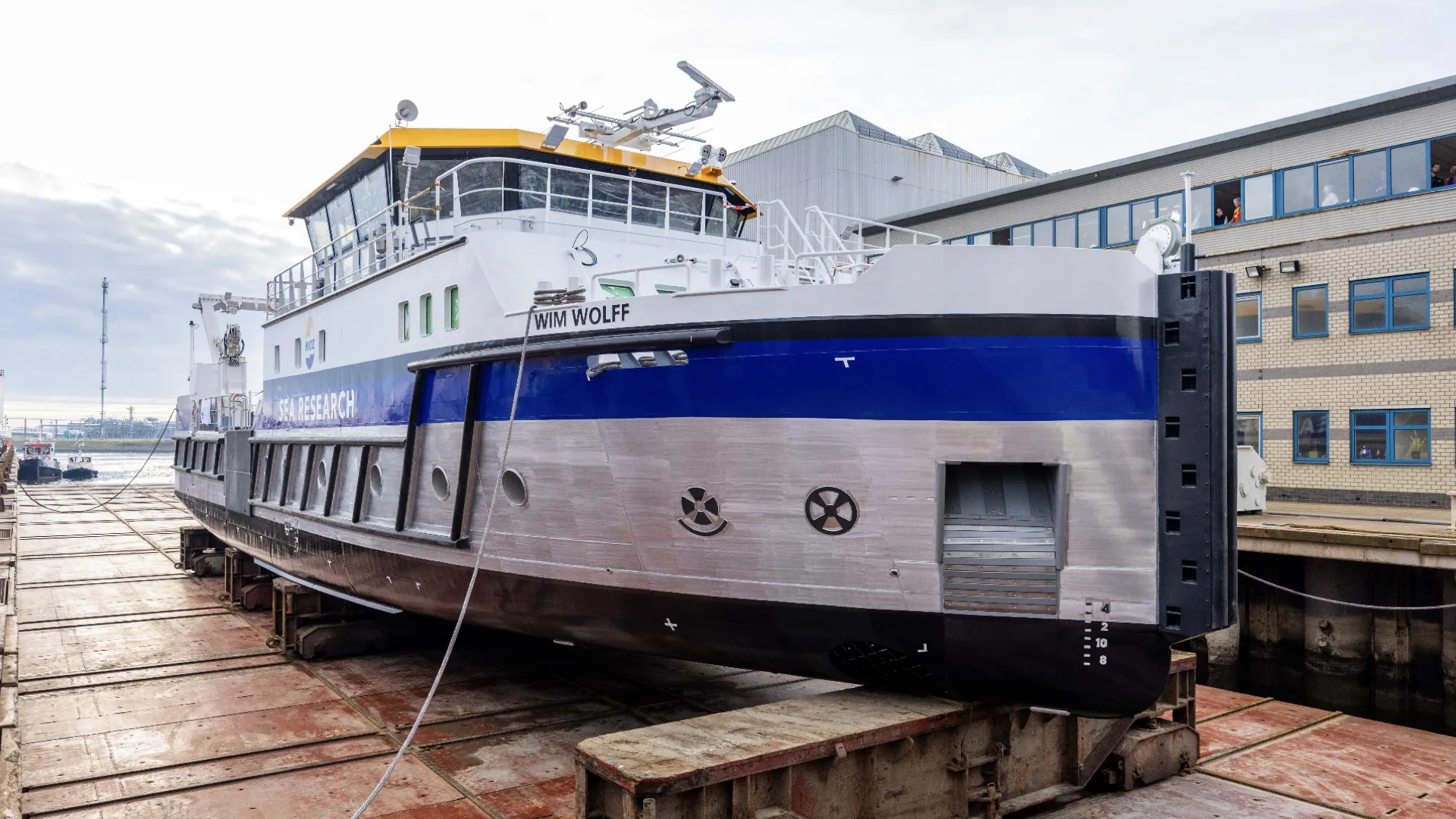
Another example is a research vessel where several DPF systems were integrated within an emissions strategy focused on particulate matter reduction, limiting visible smoke formation and future-proofing the installation. For research vessels, reliability is particularly important because emissions technology must function without unnecessarily disrupting the vessel’s deployability, maintenance planning or technical continuity. The technical value then lies not only in cleaner exhaust gases, but also in the extent to which the system fits the vessel’s daily operation and maintenance logic.
Technical Assessment and Next Steps
When particulate matter emissions, emissions labels, tender requirements or sustainability objectives no longer align well with the existing engine configuration, the first step is usually not the selection of a filter component. First, the emissions and exhaust gas system must be technically assessed under real operating conditions.
An initial assessment shows whether regeneration, thermal stability, engine room integration, maintenance access and engine load can remain sufficiently balanced for long-term emissions reduction. Especially within retrofit projects, that system analysis often determines whether a DPF system remains feasible within the vessel’s actual operating profile.
Without such an assessment, a retrofit project may too quickly be approached as filter selection or a standard solution. This creates precisely the risks that are difficult to correct later: incomplete regeneration, increasing backpressure, additional maintenance burden or an installation that operates outside its stable temperature range under part-load conditions. The technical value of DPF systems therefore arises not only from particulate matter reduction itself, but from the quality of the system analysis, real-world assessment and engine room integration that precede it.
When a DPF system must align with existing engines, varying load or future emissions objectives, the next step begins with a project-specific technical assessment.
Working Method
The DPF systems are technically assessed, developed and supplied on a project-specific basis in cooperation with our international partner. Berger Maritiem remains the fixed point of contact throughout the full process for technical coordination, project alignment and follow-up.
For each project, regeneration behaviour, thermal load, exhaust gas temperature, maintenance access, available engine room space and the operating profile are assessed in relation to one another within the emissions installation. DPF systems are therefore not interpreted separately as isolated components, but as part of a broader emissions chain surrounding the marine engine.
This working method prevents DPF retrofit from being reduced too early to filter selection alone, while the thermal and operational stability of the installation has not yet been sufficiently defined. As a result, emissions reduction remains more manageable and the risk is reduced that an installation will operate outside its stable regeneration range under real operating conditions.
Practical Examples of DPF Systems in Shipping
In practice, DPF systems are often used within retrofit projects in which existing marine engines remain operational while additional particulate matter reduction becomes necessary.
One practical example is an existing coupled convoy in which EPA Tier IV Final-certified Caterpillar engines were combined with SCR systems and self-cleaning DPF systems. This application is relevant because a coupled convoy in inland shipping may face varying load profiles, long operating days and fluctuating power demand. As a result, not only emissions reduction, but above all stable regeneration, manageable backpressure and maintenance planning determine the practical value of the system.
Another example is a research vessel where several DPF systems were integrated within an emissions strategy focused on particulate matter reduction, limiting visible smoke formation and future-proofing the installation. For research vessels, reliability is particularly important because emissions technology must function without unnecessarily disrupting the vessel’s deployability, maintenance planning or technical continuity. The technical value then lies not only in cleaner exhaust gases, but also in the extent to which the system fits the vessel’s daily operation and maintenance logic.