
- English
- Nederlands

SCR Systems for Ships
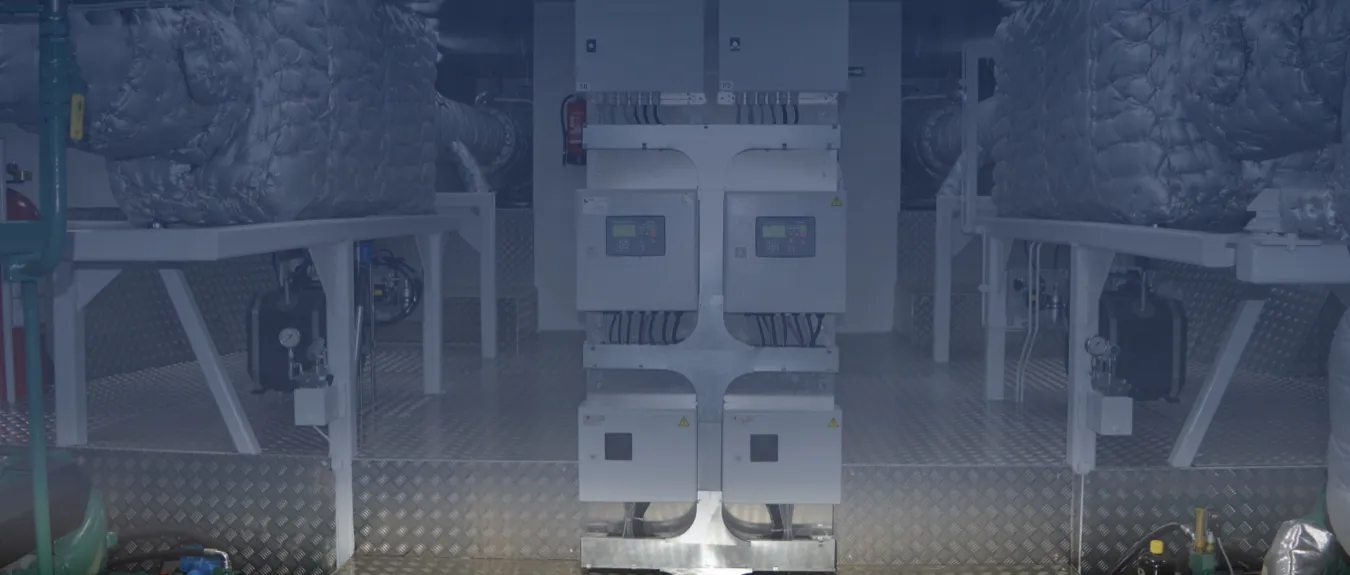
SCR systems for ships are emission reduction systems based on Selective Catalytic Reduction (SCR) that convert nitrogen oxides (NOx) in marine engine exhaust gases into nitrogen (N2) and water vapour through urea injection and an SCR catalyst. Across the maritime industry, these systems are used in a wide range of commercial vessel segments to reduce NOx emissions and, depending on the vessel and engine configuration, support compliance with emission requirements such as IMO Tier III and EU Stage V. The SCR catalyst forms the central reaction component within a broader installation comprising a urea dosing system, mixing section, SCR reactor, thermal management, monitoring and control systems and, where particulate reduction is required, DPF systems. The technical value of such an installation only emerges when the system remains stable under real operating conditions involving fluctuating engine loads, sufficient exhaust gas temperature, restricted installation space and limited maintenance access on board. In cooperation with our international partner, we support shipping companies, shipowners, superintendents and technical project managers in the selection, technical development and supply of suitable project-specific SCR systems for existing ships (retrofit) and newbuilds in inland shipping, seagoing shipping, short sea shipping, offshore, dredging, fishing, passenger transport, workboats, tugboats, defence, cruise shipping and megayacht construction.
Available worldwide
What Is an SCR System for Ships?
Within the maritime industry, an SCR system for ships is not assessed in practice as a standalone SCR catalyst but as exhaust aftertreatment integrated around the marine engine. Urea dosing, mixing, thermal management, sensors and control systems together determine whether stable NOx reduction remains achievable under operational conditions.
That system relationship becomes particularly important when emission reduction must be integrated into existing ship installations or newbuild projects. For shipping companies, shipowners, superintendents and technical managers, the assessment therefore shifts from a single component towards the interaction between engine load, exhaust gas temperature, engine room integration, maintenance access and operational stability.
This also explains why the SCR catalyst cannot be assessed separately. The catalyst can only operate reliably when the exhaust gas maintains sufficient temperature, residence time and mixing quality. Particularly in retrofit projects on existing ships with fluctuating engine loads, prolonged low-load operation or limited engine room space, the determining factor is no longer a single component but the behaviour of the installation as a whole.
How Does an SCR Catalyst Work on a Ship?
An SCR catalyst on a ship is the reaction component of an SCR system in which nitrogen oxides (NOx) from exhaust gases are chemically converted into nitrogen (N2) and water vapour. This conversion takes place because a urea solution, commonly referred to in practice as AdBlue or AUS 32, is injected into the exhaust gas stream where it forms ammonia, after which NOx reacts on the catalyst surface under suitable temperature and flow conditions.
Temperature and flow conditions therefore determine SCR system performance. Under sufficient engine load, exhaust gas temperature generally remains favourable for catalytic conversion. During prolonged low-load operation, manoeuvring or strongly fluctuating duty cycles, that temperature may drop too far. Under those conditions, urea reacts incompletely and deposits or crystallisation may develop within the exhaust gas line, mixing section or SCR reactor.
The difference between a theoretically suitable SCR catalyst and a reliable onboard SCR system therefore often lies in the installation conditions. A catalyst may be suitable for the required NOx reduction while the installation still becomes unstable when mixing, temperature, pressure loss or residence time no longer correspond with the vessel’s actual load profile. From that system dependency, the assessment quickly shifts from component selection towards Emission Stability and Configuration Risks of SCR Systems for Ships of the complete installation under real operating conditions.
When Do SCR Systems for Ships Become Technically Relevant?
SCR systems become technically relevant when a marine engine requires additional NOx reduction to remain within the intended emission profile, operating area or deployment framework. For existing inland shipping engines, this often concerns pre-CCR, CCR-1 or CCR-2 classifications. For seagoing vessels equipped with older IMO Tier I or IMO Tier II engines, that relevance mainly develops when additional emission treatment becomes necessary for future deployment or stricter NOx requirements.
In newbuild projects, this assessment usually begins during the design phase. When a vessel must operate within NOx Emission Control Areas (NECAs), international emission control zones for nitrogen oxides, the SCR system is integrated from the outset into the engine room layout, exhaust gas routing, urea storage and maintenance access. EU Stage V-related requirements may also influence that assessment at an early stage of the design process.
In retrofit projects, the focus shifts towards the existing installation. The SCR system must then integrate with existing engines, existing piping routes, available space and an operating profile that is not always favourable for exhaust aftertreatment. Component selection alone is therefore insufficient. The installation must be assessed under realistic operating conditions. This is where the assessment shifts from theoretical NOx reduction towards whether thermal stability, flow behaviour and emission performance remain reproducible during daily vessel operation.
SCR Systems Within IMO Tier III, NECA and EU Stage V
In seagoing shipping, SCR systems are often used to reduce NOx emissions towards IMO Tier III levels for vessels operating within NOx Emission Control Areas (NECAs). The technical assessment is not limited to the emission framework itself. The determining factor is whether the vessel maintains sufficient exhaust gas temperature, mixing quality and system stability under its actual operating profile to support the required NOx reduction.
In inland shipping, the focus more often lies on EU Stage V, emission labels, tender requirements and the modernization of existing engines. In that context, an SCR catalyst is regularly combined with a diesel particulate filter (DPF) system because NOx reduction alone is insufficient when particulate matter (PM) and particle number (PN) emissions also become relevant to the intended emission profile.
Real-world emission measurements may also become relevant, for example for existing non-standardized engines, pre-CCR, CCR-1 and CCR-2 engines that must demonstrate an improved emission profile through exhaust aftertreatment. Within such projects, an SCR system can contribute to NOx reduction. To comply with Stage V-related particulate and particle requirements, a diesel particulate filter system is often also required to reduce PM and PN emissions sufficiently.
The practical significance of SCR systems therefore does not arise from maritime regulation alone. IMO Tier III, NECA and EU Stage V define the emission framework, but the final assessment still depends on whether the vessel is technically, spatially and operationally suitable for a stable SCR installation. Without that connection, compliance remains a theoretical starting point rather than a workable system framework.
Alongside formal emission frameworks, operational pressure to further reduce NOx emissions from existing ship installations is also increasing. Ports, tender procedures, public clients and projects with stricter emission requirements increasingly emphasize cleaner emission profiles. As a result, SCR systems are becoming relevant not only for compliance but also for the future commercial viability of vessels.
SCR Systems and Diesel Particulate Filter Systems Within One Emission Chain
SCR systems and diesel particulate filter systems address different emissions within the same exhaust gas line. The SCR catalyst reduces nitrogen oxides (NOx), while the particulate filter captures particulate matter (PM) and solid particles (PN). When a vessel requires both NOx reduction and particulate reduction, a combined emission chain develops in which the SCR system, particulate filter, temperature profile and available installation space must align technically.
That combination makes the installation more sensitive than when both technologies are assessed separately. A temperature profile favourable for NOx conversion within the SCR catalyst is not automatically sufficient for stable particulate filter operation. Pressure loss, regeneration behaviour, mixing quality and maintenance access must also remain compatible within the same exhaust gas line. When the particulate filter requires regeneration, this may also influence the thermal behaviour of the installation.
On existing ships, this interaction often determines overall feasibility. The question is then not whether an SCR catalyst or particulate filter can be supplied separately, but whether the combined emission treatment can continue operating within the available engine room space without disproportionate maintenance pressure, thermal instability or disruption of the exhaust gas system. The assessment therefore shifts from individual emission technologies towards the stability of the complete emission architecture.
SCR Retrofit for Existing Ships
An SCR retrofit for an existing ship begins with the existing engine installation rather than the catalogue value of the catalyst. Exhaust gas temperature, engine load, exhaust gas flow rate, available space, piping configuration and maintenance access together determine whether an SCR system can be integrated in a technically defensible manner.
Depending on the engine configuration, emission target and available installation space, SCR catalysts can be designed project-specifically for a wide range of engine outputs, from smaller auxiliary and propulsion engines to larger marine installations. The technical assessment remains decisive: the design must correspond with engine output, exhaust gas flow rate, temperature profile, maintenance access and available engine room space. Depending on the configuration and operating conditions, an SCR system can achieve very high NOx reduction levels, while actual emission performance continues to depend on temperature, load profile, mixing quality and system integration.
For inland vessels equipped with non-standardized engines, pre-CCR, CCR-1 or CCR-2 engines, an SCR retrofit may become attractive when the engine remains technically serviceable but the emission profile no longer corresponds with future deployment requirements. For seagoing vessels equipped with older IMO Tier I or IMO Tier II engines, additional NOx reduction may become relevant when the vessel must increasingly operate within emission-sensitive trading areas or contract environments.
A feasibility study for marine SCR systems must therefore assess not only engine output but, above all, the vessel’s actual operating points. Two ships with comparable power output may require entirely different SCR configurations because of differences in operating profile, load fluctuations and engine room layout. Prolonged low-load operation makes that assessment particularly sensitive because the catalytic reaction moves more quickly outside its stable temperature range.
When retrofit limitations, maintenance access, contamination and emission requirements begin to determine long-term operational viability, further analysis shifts towards Emission Compliance, Retrofit and Degradation of SCR Systems for Ships.
Engine Room Integration of SCR Systems
Engine room integration often determines whether an SCR system remains not only technically selectable but also practically installable on board. A complete SCR installation requires space for the SCR catalyst or SCR reactor, urea dosing system, mixing section, sensors, piping, insulation, urea storage, access hatches and maintenance clearance. In retrofit projects, this installation usually has to be integrated around existing structures and existing exhaust gas routing.
Particularly in older or compact engine rooms, a direct trade-off therefore develops between emission reduction and practical maintainability. An SCR system that is too difficult to access may eventually create greater downtime risk and maintenance pressure than initially anticipated. In combinations involving particulate filters or thermal management systems, physical integration also becomes decisive for overall emission system reliability.
Engine room integration for SCR systems must therefore be developed project-specifically. The position of the SCR reactor, mixing section, piping, insulation and maintenance access partly determines whether the installation remains stable, accessible and maintainable under real operating loads. A standard configuration therefore does not automatically fit within every existing ship installation.
Thermal Management, Low-Load Operation and Crystallisation
Thermal management is decisive for the reliability of SCR systems on ships operating under fluctuating loads. When exhaust gas temperature remains too low, urea may not evaporate sufficiently or react completely. This increases the risk of crystallisation, deposits and contamination of the SCR catalyst.
That risk increases particularly on workboats, dredgers, inland vessels, tugboats and generator sets operating under low or fluctuating loads. The engine may continue operating normally from a technical perspective while the exhaust aftertreatment system no longer receives sufficiently stable thermal conditions for long-term reliable reaction behaviour.
In such situations, thermal management therefore becomes part of the system selection process. Additional heating, modified control strategies or a different exhaust gas routing configuration may be required to keep the SCR system operational. That decision must be assessed project-specifically because additional thermal support may also affect energy consumption, maintenance requirements and installation complexity.
Maintenance and Monitoring of SCR Systems
SCR systems can remain relatively low-maintenance as long as temperature, urea dosing, flow behaviour and catalyst condition remain within controllable margins. Once that balance becomes unstable, injectors, mixing sections, piping and the SCR catalyst itself may become contaminated or respond less consistently.
Maintenance of SCR systems therefore extends beyond periodic inspection of a single component. Pressure loss, temperature behaviour, NOx values, urea consumption, crystallisation and control system fault messages together indicate whether the system continues operating within its stable operating range. Once real-world measurements, temperature behaviour and NOx values become less repeatable, further assessment within Emission Validation and Performance Limits of SCR Systems for Ships becomes relevant.
For technical managers and superintendents, trend monitoring becomes particularly important. A slight increase in pressure loss or a recurring deviation in emission values may not immediately result in failure but may indicate that the installation is becoming less robust. Early interpretation of such signals prevents maintenance issues from only becoming visible once emission performance or vessel availability is already under pressure. The assessment therefore gradually shifts from technical operation towards the reproducibility of emission performance under real operating conditions.
Technical Feasibility of SCR Systems on Existing Ships
The feasibility of an SCR system depends on the required NOx reduction and the existing onboard installation. Engine load, exhaust gas temperature, available engine room space, piping configuration, thermal stability and maintenance access together determine whether the system can continue operating stably over the long term.
In retrofit projects, that feasibility often converges within engine room integration. An existing installation with limited space, low exhaust gas temperatures or combined emission treatment through an SCR system and particulate filter requires a different approach from a newbuild configuration with installation space reserved in advance.
The existing ship installation must therefore be assessed as a complete system. The relevant question is not only whether an SCR catalyst can be applied, but whether the exhaust gas routing, emission treatment and maintenance access remain stable within the vessel’s actual operating profile.
SCR Systems for Inland Shipping, Seagoing Shipping and Workboats
In inland shipping, SCR systems are often assessed from the perspective of retrofit, EU Stage V, emission labels, Green Award programmes, tenders and the remaining service life of existing engines. Engine loads are often fluctuating, which means thermal management, real-world measurements and engine room integration carry greater weight.
In seagoing shipping, the focus more often lies on IMO Tier III, NECA operation, newbuild specifications and larger retrofit projects. Although engine load may remain more stable in certain operating profiles than in inland shipping, system integration remains complex because of engine output, available space, classification requirements and maintenance logistics.
In offshore, dredging, fishing, passenger transport, tugboat operations, cruise shipping, defence and megayacht construction, the balance shifts again. In these segments, NOx reduction, operating profile, onboard space and operational reliability together determine whether an SCR system is suitable. A configuration suitable for a continuously loaded main engine is therefore not automatically suitable for a vessel with extensive idle operation, short working cycles or strongly fluctuating power demand.
Strategic Value of SCR Systems for Ships
Within the maritime industry, SCR systems are assessed not only as emission technologies but also as part of the broader deployability of a vessel. Once NOx reduction begins affecting emission labels, tender eligibility, port access or sustainability criteria, the choice of exhaust aftertreatment directly affects the economic and operational lifespan of existing engine configurations.
For shipping companies and shipowners, this often creates a broader assessment between engine replacement, newbuild construction, alternative fuels and retrofit-based exhaust aftertreatment. Within that assessment, an SCR system may become a logical solution when the existing engine and installation still provide a sufficient foundation for stable emission reduction.
The strategic value therefore does not lie in the catalyst alone, but in whether the emission system corresponds with the engine, vessel, operating profile, emission target and commercial deployment. Only within that broader relationship can SCR technology contribute to a realistic NOx reduction pathway without requiring immediate full replacement of the existing propulsion installation. Once emission performance begins affecting market access, residual value, tenders and investment capacity, the assessment shifts towards Commercial Deployability and Investment Pressure Around SCR Systems for Ships.
Subsidies, Financing and Investment Capacity Around SCR Systems
Within retrofit projects, SCR systems are regularly assessed in combination with subsidy schemes, emission labels, Green Award programmes and other decarbonization initiatives within inland shipping and seagoing shipping. Particularly for existing ships, financial support may influence the assessment between retrofit, engine replacement or accelerated newbuild construction.
Financing becomes particularly relevant when emission reduction must not only be technically necessary but also economically compatible with the vessel’s remaining service life. This assessment involves not only investment costs but also future deployability, tender position, port-related benefits and sustainability criteria imposed by clients or financiers.
Within Dutch decarbonization programmes, schemes such as the Environmental Investment Allowance (MIA) and Random Depreciation of Environmental Investments (Vamil) may, depending on project structure, emission target and applicable conditions, also become relevant for retrofit investments in emission reduction technology. Within international retrofit and decarbonization projects, European subsidy programmes, emission-related incentive schemes or port-related sustainability initiatives may additionally influence the investment assessment around SCR systems.
Which schemes are practically applicable depends on vessel type, engine configuration, emission target, operating area and the combination of emission technologies within the overall decarbonization project. Financing is therefore usually assessed project-specifically rather than solely from a single subsidy scheme or standard investment model.
SCR Systems for Ships
In cooperation with our international partner, we support shipping companies, shipowners, superintendents and technical project managers in the selection, technical development and supply of suitable project-specific SCR systems for existing ships (retrofit) and newbuilds in inland shipping, seagoing shipping, short sea shipping, offshore, dredging, fishing, passenger transport, workboats, tugboats, defence, cruise shipping and megayacht construction.
Available worldwide
What Is an SCR System for Ships?
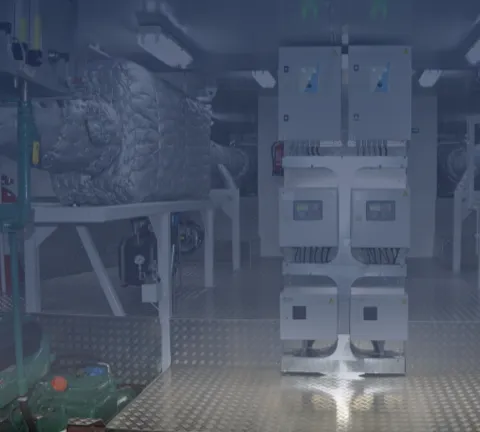
SCR systems for ships are emission reduction systems based on Selective Catalytic Reduction (SCR) that convert nitrogen oxides (NOx) in marine engine exhaust gases into nitrogen (N2) and water vapour through urea injection and an SCR catalyst.
Across the maritime industry, these systems are used in a wide range of commercial vessel segments to reduce NOx emissions and, depending on the vessel and engine configuration, support compliance with emission requirements such as IMO Tier III and EU Stage V.
The SCR catalyst forms the central reaction component within a broader installation comprising a urea dosing system, mixing section, SCR reactor, thermal management, monitoring and control systems and, where particulate reduction is required, DPF systems.
The technical value of such an installation only emerges when the system remains stable under real operating conditions involving fluctuating engine loads, sufficient exhaust gas temperature, restricted installation space and limited maintenance access on board.
Within the maritime industry, an SCR system for ships is not assessed in practice as a standalone SCR catalyst but as exhaust aftertreatment integrated around the marine engine. Urea dosing, mixing, thermal management, sensors and control systems together determine whether stable NOx reduction remains achievable under operational conditions.
That system relationship becomes particularly important when emission reduction must be integrated into existing ship installations or newbuild projects. For shipping companies, shipowners, superintendents and technical managers, the assessment therefore shifts from a single component towards the interaction between engine load, exhaust gas temperature, engine room integration, maintenance access and operational stability.
This also explains why the SCR catalyst cannot be assessed separately. The catalyst can only operate reliably when the exhaust gas maintains sufficient temperature, residence time and mixing quality. Particularly in retrofit projects on existing ships with fluctuating engine loads, prolonged low-load operation or limited engine room space, the determining factor is no longer a single component but the behaviour of the installation as a whole.
How Does an SCR Catalyst Work on a Ship?
An SCR catalyst on a ship is the reaction component of an SCR system in which nitrogen oxides (NOx) from exhaust gases are chemically converted into nitrogen (N2) and water vapour. This conversion takes place because a urea solution, commonly referred to in practice as AdBlue or AUS 32, is injected into the exhaust gas stream where it forms ammonia, after which NOx reacts on the catalyst surface under suitable temperature and flow conditions.
Temperature and flow conditions therefore determine SCR system performance. Under sufficient engine load, exhaust gas temperature generally remains favourable for catalytic conversion. During prolonged low-load operation, manoeuvring or strongly fluctuating duty cycles, that temperature may drop too far. Under those conditions, urea reacts incompletely and deposits or crystallisation may develop within the exhaust gas line, mixing section or SCR reactor.
The difference between a theoretically suitable SCR catalyst and a reliable onboard SCR system therefore often lies in the installation conditions. A catalyst may be suitable for the required NOx reduction while the installation still becomes unstable when mixing, temperature, pressure loss or residence time no longer correspond with the vessel’s actual load profile. From that system dependency, the assessment quickly shifts from component selection towards Emission Stability and Configuration Risks of SCR Systems for Ships of the complete installation under real operating conditions.
When Do SCR Systems for Ships Become Technically Relevant?
SCR systems become technically relevant when a marine engine requires additional NOx reduction to remain within the intended emission profile, operating area or deployment framework. For existing inland shipping engines, this often concerns pre-CCR, CCR-1 or CCR-2 classifications. For seagoing vessels equipped with older IMO Tier I or IMO Tier II engines, that relevance mainly develops when additional emission treatment becomes necessary for future deployment or stricter NOx requirements.
In newbuild projects, this assessment usually begins during the design phase. When a vessel must operate within NOx Emission Control Areas (NECAs), international emission control zones for nitrogen oxides, the SCR system is integrated from the outset into the engine room layout, exhaust gas routing, urea storage and maintenance access. EU Stage V-related requirements may also influence that assessment at an early stage of the design process.
In retrofit projects, the focus shifts towards the existing installation. The SCR system must then integrate with existing engines, existing piping routes, available space and an operating profile that is not always favourable for exhaust aftertreatment. Component selection alone is therefore insufficient. The installation must be assessed under realistic operating conditions. This is where the assessment shifts from theoretical NOx reduction towards whether thermal stability, flow behaviour and emission performance remain reproducible during daily vessel operation.
SCR Systems Within IMO Tier III, NECA and EU Stage V
In seagoing shipping, SCR systems are often used to reduce NOx emissions towards IMO Tier III levels for vessels operating within NOx Emission Control Areas (NECAs). The technical assessment is not limited to the emission framework itself. The determining factor is whether the vessel maintains sufficient exhaust gas temperature, mixing quality and system stability under its actual operating profile to support the required NOx reduction.
In inland shipping, the focus more often lies on EU Stage V, emission labels, tender requirements and the modernization of existing engines. In that context, an SCR catalyst is regularly combined with a diesel particulate filter (DPF) system because NOx reduction alone is insufficient when particulate matter (PM) and particle number (PN) emissions also become relevant to the intended emission profile.
Real-world emission measurements may also become relevant, for example for existing non-standardized engines, pre-CCR, CCR-1 and CCR-2 engines that must demonstrate an improved emission profile through exhaust aftertreatment. Within such projects, an SCR system can contribute to NOx reduction. To comply with Stage V-related particulate and particle requirements, a diesel particulate filter system is often also required to reduce PM and PN emissions sufficiently.
The practical significance of SCR systems therefore does not arise from maritime regulation alone. IMO Tier III, NECA and EU Stage V define the emission framework, but the final assessment still depends on whether the vessel is technically, spatially and operationally suitable for a stable SCR installation. Without that connection, compliance remains a theoretical starting point rather than a workable system framework.
Alongside formal emission frameworks, operational pressure to further reduce NOx emissions from existing ship installations is also increasing. Ports, tender procedures, public clients and projects with stricter emission requirements increasingly emphasize cleaner emission profiles. As a result, SCR systems are becoming relevant not only for compliance but also for the future commercial viability of vessels.
SCR Systems and Diesel Particulate Filter Systems Within One Emission Chain
SCR systems and diesel particulate filter systems address different emissions within the same exhaust gas line. The SCR catalyst reduces nitrogen oxides (NOx), while the particulate filter captures particulate matter (PM) and solid particles (PN). When a vessel requires both NOx reduction and particulate reduction, a combined emission chain develops in which the SCR system, particulate filter, temperature profile and available installation space must align technically.
That combination makes the installation more sensitive than when both technologies are assessed separately. A temperature profile favourable for NOx conversion within the SCR catalyst is not automatically sufficient for stable particulate filter operation. Pressure loss, regeneration behaviour, mixing quality and maintenance access must also remain compatible within the same exhaust gas line. When the particulate filter requires regeneration, this may also influence the thermal behaviour of the installation.
On existing ships, this interaction often determines overall feasibility. The question is then not whether an SCR catalyst or particulate filter can be supplied separately, but whether the combined emission treatment can continue operating within the available engine room space without disproportionate maintenance pressure, thermal instability or disruption of the exhaust gas system. The assessment therefore shifts from individual emission technologies towards the stability of the complete emission architecture.
SCR Retrofit for Existing Ships
An SCR retrofit for an existing ship begins with the existing engine installation rather than the catalogue value of the catalyst. Exhaust gas temperature, engine load, exhaust gas flow rate, available space, piping configuration and maintenance access together determine whether an SCR system can be integrated in a technically defensible manner.
Depending on the engine configuration, emission target and available installation space, SCR catalysts can be designed project-specifically for a wide range of engine outputs, from smaller auxiliary and propulsion engines to larger marine installations. The technical assessment remains decisive: the design must correspond with engine output, exhaust gas flow rate, temperature profile, maintenance access and available engine room space. Depending on the configuration and operating conditions, an SCR system can achieve very high NOx reduction levels, while actual emission performance continues to depend on temperature, load profile, mixing quality and system integration.
For inland vessels equipped with non-standardized engines, pre-CCR, CCR-1 or CCR-2 engines, an SCR retrofit may become attractive when the engine remains technically serviceable but the emission profile no longer corresponds with future deployment requirements. For seagoing vessels equipped with older IMO Tier I or IMO Tier II engines, additional NOx reduction may become relevant when the vessel must increasingly operate within emission-sensitive trading areas or contract environments.
A feasibility study for marine SCR systems must therefore assess not only engine output but, above all, the vessel’s actual operating points. Two ships with comparable power output may require entirely different SCR configurations because of differences in operating profile, load fluctuations and engine room layout. Prolonged low-load operation makes that assessment particularly sensitive because the catalytic reaction moves more quickly outside its stable temperature range.
When retrofit limitations, maintenance access, contamination and emission requirements begin to determine long-term operational viability, further analysis shifts towards Emission Compliance, Retrofit and Degradation of SCR Systems for Ships.
Engine Room Integration of SCR Systems
Engine room integration often determines whether an SCR system remains not only technically selectable but also practically installable on board. A complete SCR installation requires space for the SCR catalyst or SCR reactor, urea dosing system, mixing section, sensors, piping, insulation, urea storage, access hatches and maintenance clearance. In retrofit projects, this installation usually has to be integrated around existing structures and existing exhaust gas routing.
Particularly in older or compact engine rooms, a direct trade-off therefore develops between emission reduction and practical maintainability. An SCR system that is too difficult to access may eventually create greater downtime risk and maintenance pressure than initially anticipated. In combinations involving particulate filters or thermal management systems, physical integration also becomes decisive for overall emission system reliability.
Engine room integration for SCR systems must therefore be developed project-specifically. The position of the SCR reactor, mixing section, piping, insulation and maintenance access partly determines whether the installation remains stable, accessible and maintainable under real operating loads. A standard configuration therefore does not automatically fit within every existing ship installation.
Thermal Management, Low-Load Operation and Crystallisation
Thermal management is decisive for the reliability of SCR systems on ships operating under fluctuating loads. When exhaust gas temperature remains too low, urea may not evaporate sufficiently or react completely. This increases the risk of crystallisation, deposits and contamination of the SCR catalyst.
That risk increases particularly on workboats, dredgers, inland vessels, tugboats and generator sets operating under low or fluctuating loads. The engine may continue operating normally from a technical perspective while the exhaust aftertreatment system no longer receives sufficiently stable thermal conditions for long-term reliable reaction behaviour.
In such situations, thermal management therefore becomes part of the system selection process. Additional heating, modified control strategies or a different exhaust gas routing configuration may be required to keep the SCR system operational. That decision must be assessed project-specifically because additional thermal support may also affect energy consumption, maintenance requirements and installation complexity.
Maintenance and Monitoring of SCR Systems
SCR systems can remain relatively low-maintenance as long as temperature, urea dosing, flow behaviour and catalyst condition remain within controllable margins. Once that balance becomes unstable, injectors, mixing sections, piping and the SCR catalyst itself may become contaminated or respond less consistently.
Maintenance of SCR systems therefore extends beyond periodic inspection of a single component. Pressure loss, temperature behaviour, NOx values, urea consumption, crystallisation and control system fault messages together indicate whether the system continues operating within its stable operating range. Once real-world measurements, temperature behaviour and NOx values become less repeatable, further assessment within Emission Validation and Performance Limits of SCR Systems for Ships becomes relevant.
For technical managers and superintendents, trend monitoring becomes particularly important. A slight increase in pressure loss or a recurring deviation in emission values may not immediately result in failure but may indicate that the installation is becoming less robust. Early interpretation of such signals prevents maintenance issues from only becoming visible once emission performance or vessel availability is already under pressure. The assessment therefore gradually shifts from technical operation towards the reproducibility of emission performance under real operating conditions.
Technical Feasibility of SCR Systems on Existing Ships
The feasibility of an SCR system depends on the required NOx reduction and the existing onboard installation. Engine load, exhaust gas temperature, available engine room space, piping configuration, thermal stability and maintenance access together determine whether the system can continue operating stably over the long term.
In retrofit projects, that feasibility often converges within engine room integration. An existing installation with limited space, low exhaust gas temperatures or combined emission treatment through an SCR system and particulate filter requires a different approach from a newbuild configuration with installation space reserved in advance.
The existing ship installation must therefore be assessed as a complete system. The relevant question is not only whether an SCR catalyst can be applied, but whether the exhaust gas routing, emission treatment and maintenance access remain stable within the vessel’s actual operating profile.
SCR Systems for Inland Shipping, Seagoing Shipping and Workboats
In inland shipping, SCR systems are often assessed from the perspective of retrofit, EU Stage V, emission labels, Green Award programmes, tenders and the remaining service life of existing engines. Engine loads are often fluctuating, which means thermal management, real-world measurements and engine room integration carry greater weight.
In seagoing shipping, the focus more often lies on IMO Tier III, NECA operation, newbuild specifications and larger retrofit projects. Although engine load may remain more stable in certain operating profiles than in inland shipping, system integration remains complex because of engine output, available space, classification requirements and maintenance logistics.
In offshore, dredging, fishing, passenger transport, tugboat operations, cruise shipping, defence and megayacht construction, the balance shifts again. In these segments, NOx reduction, operating profile, onboard space and operational reliability together determine whether an SCR system is suitable. A configuration suitable for a continuously loaded main engine is therefore not automatically suitable for a vessel with extensive idle operation, short working cycles or strongly fluctuating power demand.
Strategic Value of SCR Systems for Ships
Within the maritime industry, SCR systems are assessed not only as emission technologies but also as part of the broader deployability of a vessel. Once NOx reduction begins affecting emission labels, tender eligibility, port access or sustainability criteria, the choice of exhaust aftertreatment directly affects the economic and operational lifespan of existing engine configurations.
For shipping companies and shipowners, this often creates a broader assessment between engine replacement, newbuild construction, alternative fuels and retrofit-based exhaust aftertreatment. Within that assessment, an SCR system may become a logical solution when the existing engine and installation still provide a sufficient foundation for stable emission reduction.
The strategic value therefore does not lie in the catalyst alone, but in whether the emission system corresponds with the engine, vessel, operating profile, emission target and commercial deployment. Only within that broader relationship can SCR technology contribute to a realistic NOx reduction pathway without requiring immediate full replacement of the existing propulsion installation. Once emission performance begins affecting market access, residual value, tenders and investment capacity, the assessment shifts towards Commercial Deployability and Investment Pressure Around SCR Systems for Ships.
Subsidies, Financing and Investment Capacity Around SCR Systems
Within retrofit projects, SCR systems are regularly assessed in combination with subsidy schemes, emission labels, Green Award programmes and other decarbonization initiatives within inland shipping and seagoing shipping. Particularly for existing ships, financial support may influence the assessment between retrofit, engine replacement or accelerated newbuild construction.
Financing becomes particularly relevant when emission reduction must not only be technically necessary but also economically compatible with the vessel’s remaining service life. This assessment involves not only investment costs but also future deployability, tender position, port-related benefits and sustainability criteria imposed by clients or financiers.
Within Dutch decarbonization programmes, schemes such as the Environmental Investment Allowance (MIA) and Random Depreciation of Environmental Investments (Vamil) may, depending on project structure, emission target and applicable conditions, also become relevant for retrofit investments in emission reduction technology. Within international retrofit and decarbonization projects, European subsidy programmes, emission-related incentive schemes or port-related sustainability initiatives may additionally influence the investment assessment around SCR systems.
Which schemes are practically applicable depends on vessel type, engine configuration, emission target, operating area and the combination of emission technologies within the overall decarbonization project. Financing is therefore usually assessed project-specifically rather than solely from a single subsidy scheme or standard investment model.
Practical Examples of SCR Systems in Shipping
In practice, SCR systems for ships are often applied within retrofit projects in which existing marine engines remain technically operational while additional NOx reduction becomes necessary for future deployment, tenders, emission labels or access to emission-sensitive operating areas.
One practical example concerns a crane vessel from 1964 that was modernized with an SCR system for emission reduction of the existing engine installation. Retrofit was the logical approach because the existing installation remained operationally viable while the emission profile no longer corresponded with sustainability requirements linked to future deployment. This tension between preserving existing technology and complying with higher emission requirements made project-specific exhaust aftertreatment relevant. The combination of retrofit, NOx reduction and decarbonization contributed to a long-term contract with the Port of Rotterdam Authority, obtaining a Green Award and strengthening the vessel’s position within projects where emission performance carries greater weight.
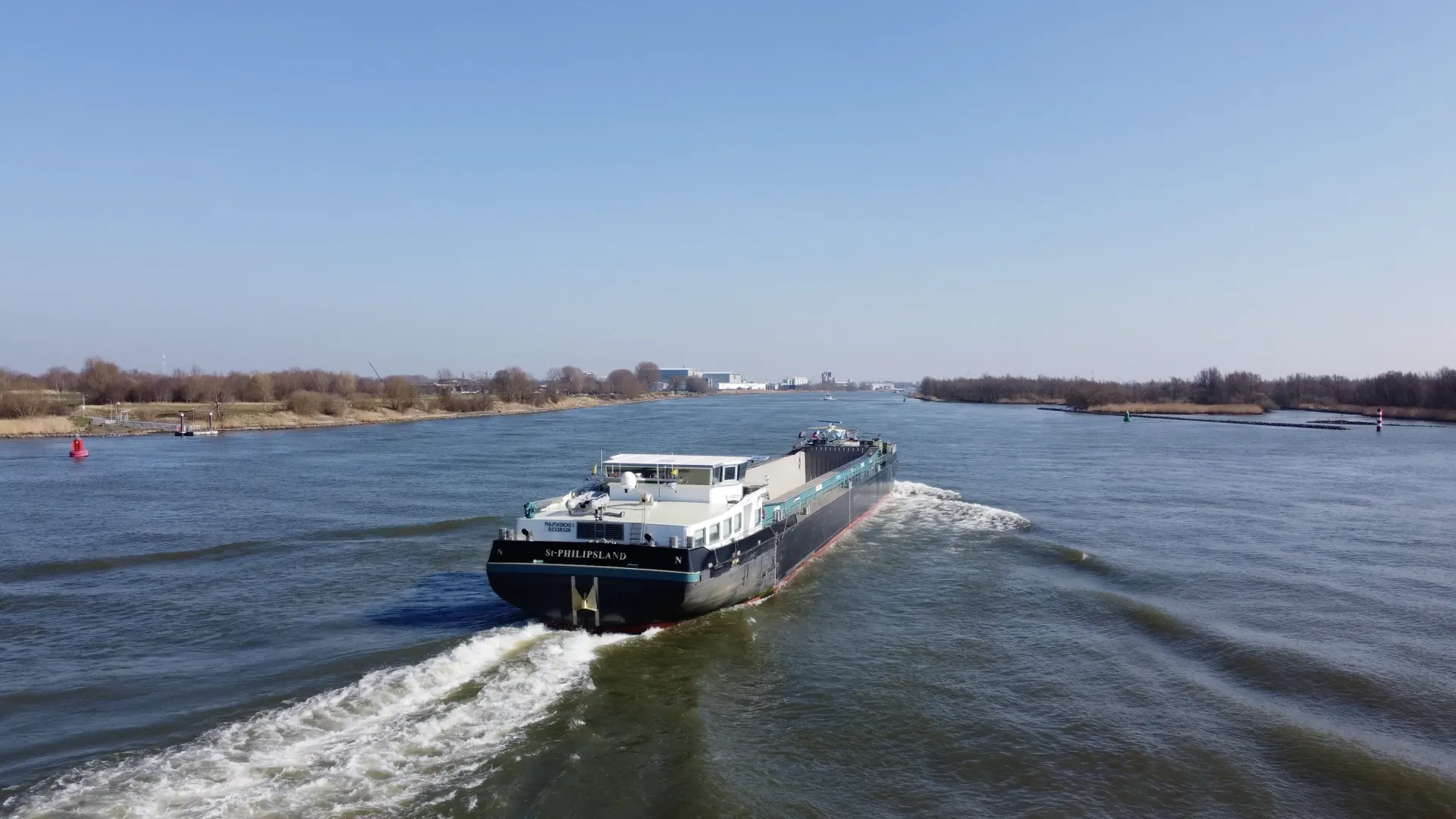
Another example concerns an innovative hopper barge in which an SCR system was integrated as part of a broader emission strategy focused on nitrogen reduction and future-proof deployment within inland shipping. The focus was not solely on the SCR catalyst itself, but on the practical integration of exhaust aftertreatment within the vessel’s operating profile. The technical question was not only whether NOx could be reduced, but whether the installation also corresponded with load fluctuations, available space and onboard operations.
Technical Assessment and Next Steps
When NOx emissions, future deployment requirements, emission labels or operational requirements no longer correspond properly with the existing engine configuration, the first step usually does not lie in selecting an SCR catalyst. The exhaust gas and emission system must first be technically assessed within the current installation. Only then can it be determined whether an SCR system can be integrated stably within an existing vessel or newbuild project.
An initial technical assessment clarifies whether additional exhaust aftertreatment is genuinely necessary and which system limitations become decisive once an SCR system is added. This assessment does not concern NOx reduction alone, but above all the interaction between engine load, exhaust gas temperature, thermal management, engine room integration, maintenance access and the vessel’s operating profile.
Without that assessment, a retrofit project may be approached too early as a component supply or standard solution. This is precisely when risks emerge that later become difficult to correct: insufficient temperature margins, crystallisation, increasing maintenance pressure or an installation that moves outside its stable operating range under low-load conditions. The technical value of SCR systems therefore does not arise solely from the SCR catalyst itself, but from the quality of the system analysis, practical assessment and engine room integration preceding it. From that same system analysis, the assessment then shifts from technical feasibility towards emission stability, operational viability and ultimately the vessel’s commercial deployability.
When an SCR system must integrate with existing engines, limited installation space or future emission targets, the next step begins with a project-specific technical assessment.
Working Method
The SCR systems are assessed, technically developed and supplied project-specifically in cooperation with our international partner. Throughout the entire process, Berger Maritiem remains the fixed point of contact for technical coordination, project alignment and follow-up.
The working method is based on short communication lines, practice-oriented assessment and technical development aligned with the existing installation, operating profile, emission targets and vessel use.
For each project, it is determined whether an SCR system can be integrated sufficiently stably within the existing engine room configuration or newbuild installation. Engine load, exhaust gas temperature, available space, thermal management, maintenance access, emission targets and interaction with other emission technologies such as diesel particulate filters are therefore not assessed separately but treated as one interconnected technical framework.
This working method prevents an SCR project from being reduced too early to the selection of an SCR catalyst alone while installation boundary conditions remain insufficiently defined. As a result, not only does emission reduction remain more technically defensible, but it also prevents the installation from moving outside its stable thermal or operational range under real operating conditions.
Practical Examples of SCR Systems in Shipping
In practice, SCR systems for ships are often applied within retrofit projects in which existing marine engines remain technically operational while additional NOx reduction becomes necessary for future deployment, tenders, emission labels or access to emission-sensitive operating areas.
One practical example concerns a crane vessel from 1964 that was modernized with an SCR system for emission reduction of the existing engine installation. Retrofit was the logical approach because the existing installation remained operationally viable while the emission profile no longer corresponded with sustainability requirements linked to future deployment. This tension between preserving existing technology and complying with higher emission requirements made project-specific exhaust aftertreatment relevant. The combination of retrofit, NOx reduction and decarbonization contributed to a long-term contract with the Port of Rotterdam Authority, obtaining a Green Award and strengthening the vessel’s position within projects where emission performance carries greater weight.
Another example concerns an innovative hopper barge in which an SCR system was integrated as part of a broader emission strategy focused on nitrogen reduction and future-proof deployment within inland shipping. The focus was not solely on the SCR catalyst itself, but on the practical integration of exhaust aftertreatment within the vessel’s operating profile. The technical question was not only whether NOx could be reduced, but whether the installation also corresponded with load fluctuations, available space and onboard operations.