
- English
- Nederlands

Rudder Systems for Ships
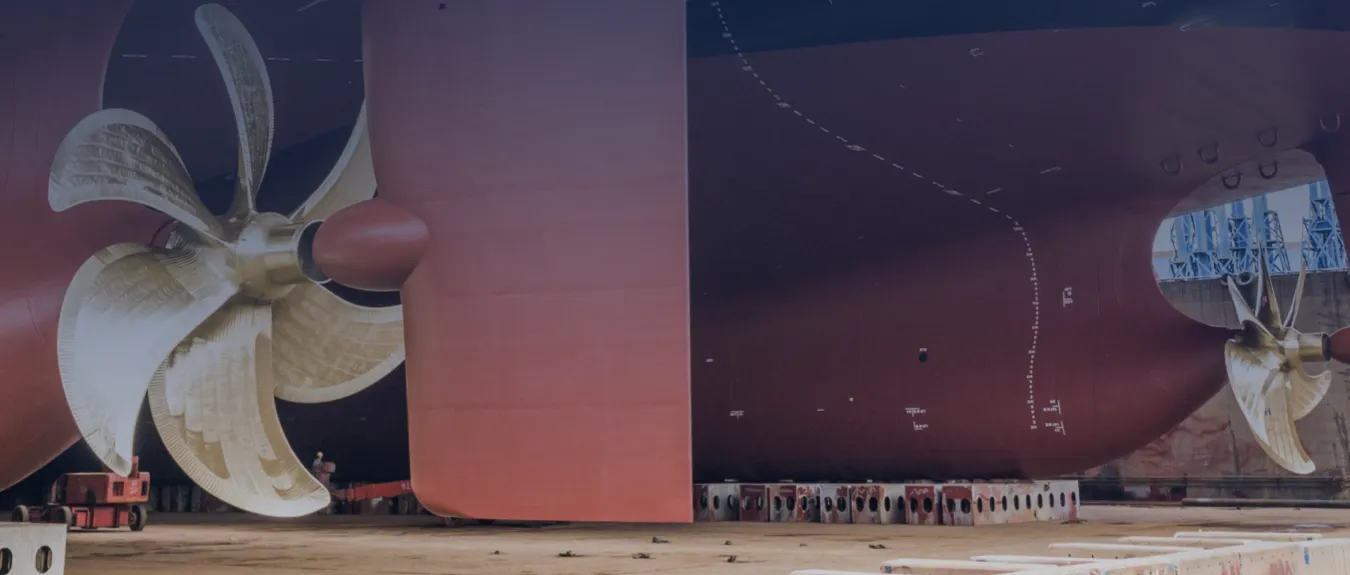
Rudder systems for ships are complete steering systems that convert steering input into course change, manoeuvrability and control within flow, loading and propulsion. A rudder system comprises the rudder blade, rudder geometry, suspension arrangement, steering system and the hydrodynamic interaction with the ship propeller, propeller nozzle, the variable blade pitch setting of Controllable Pitch Propeller (CPP) blades, the hull and other appendages. This system interaction determines whether a rudder system builds up steering force predictably, limits energy loss and maintains course control under changing operating conditions. A rudder system can therefore only be assessed properly when flow behaviour, steering response and propulsion behaviour are evaluated together. Rudder systems are therefore more than steering components: they influence the flow behind the propeller and directly affect control, energy consumption and predictability. In cooperation with our international partner, we support shipowners, shipping companies, superintendents and technical managers in analysing, designing, optimizing and supplying all common types of ship rudders, complete rudder systems and individual rudder blades for newbuild and retrofit projects, while maintaining the interaction between rudder blade geometry, propeller behaviour, nozzle flow, blade pitch setting, hull flow and appendages as the governing basis for the required system behaviour.
Available worldwide
Which Rudder Types Fall Within Rudder Systems?
This assessment covers a broad range of configurations, from twisted rudders, flap rudders, spade rudders, semi-spade rudders and full skeg rudders to dedicated inland shipping rudders. Each rudder type differs in how flow develops around the rudder, how steering force is generated and how loads develop within the configuration.
Across tugboats, workboats, offshore vessels, inland vessels, dredgers, ferries and oceangoing ships, the rudder system can shift from a fixed component into a determining factor within overall vessel behaviour. That role becomes apparent once vessel behaviour and energy consumption no longer correspond with comparable operating conditions.
When Does Rudder System Behaviour Become Technically Inconsistent?
A rudder system no longer functions correctly once steering behaviour, energy consumption and control no longer correspond with the existing installation. Deviations in rudder behaviour rarely appear as one obvious fault. Instead, they emerge through the way a vessel responds, for example through delayed course build-up, an increasing turning circle, instability during steering corrections or higher energy consumption without an immediate technical explanation. Because these signals develop across the system simultaneously, they often remain unnoticed in service for longer than technically desirable.
The decisive moment therefore does not begin with a defect, but at the point where behaviour can no longer be traced back to the existing installation. It must then be determined whether the rudder system still matches the actual operating conditions, or whether behaviour is increasingly determined by a mismatch between flow behaviour, loading and geometry. At that stage, system analysis is no longer an optimization step alone, but a technical necessity.
For technical management, this marks the point where the rudder no longer behaves as a downstream component, but becomes part of both the underlying cause and the eventual solution.
Rudder and Propeller as One Hydrodynamic System Within Rudder Systems
The operation of a rudder system cannot be separated from the propeller. Where present, flow-influencing components such as nozzles or Controllable Pitch Propeller (CPP) blade settings directly affect the flow field around the rudder. Behind the propeller, an accelerated and rotating flow field develops in which substantial energy remains present. The rudder operates directly within this flow and influences how that energy is distributed, dissipated or utilized.
Depending on geometry, profile shape and positioning, the rudder may stabilize the flow and convert rotational energy into effective thrust, or introduce additional resistance when the geometry no longer corresponds with the surrounding flow regime. This interaction determines not only steering response, but also the vessel’s overall energy consumption.
The rudder therefore shifts from a steering component into an integral part of propulsion performance itself. The quality of that interaction is determined by hull, propeller and rudder functioning together as one hydrodynamic system. This technical relationship forms the basis of Technology and Configuration of Rudder Systems, where flow behaviour, inflow conditions and force build-up are examined further.
Why CFD Is Leading in the Assessment of Rudder Systems
Once vessel behaviour can no longer be explained consistently through operational experience, design rules or individual components alone, system-level analysis becomes necessary. Computational Fluid Dynamics (CFD) then becomes the leading method because it is the only method capable of providing insight into the actual flow distribution behind the propeller and around the rudder within the existing configuration.
At that stage, analysis shifts from isolated component behaviour to complete system behaviour. CFD reveals how velocity fields, pressure zones and turbulence develop and how the rudder responds under representative operating conditions. This makes it possible to determine whether a selected rudder type or ship rudder still corresponds with the surrounding flow regime, or whether it introduces disturbances that contribute to resistance, cavitation, energy loss or reduced control.
Within newbuild projects, CFD is used to align rudder, propeller and hull from the earliest design stages onwards. Within retrofit projects, CFD becomes the technical decision point at which modifications in rudder type, profile geometry or positioning are assessed for technical feasibility. On that basis, different rudder concepts can be compared and a ship rudder can be developed as a CFD-optimized rudder specifically matched to the actual flow regime and operational profile. The decision-making process therefore shifts away from assumptions and reference designs towards demonstrable system performance. Further validation of flow behaviour, energy distribution and reproducibility under load is developed within Design, Validation and Performance Assessment of Rudder Systems.
How Do Rudder Types Differ in Flow Behaviour and Loading?
The functional differences between rudder types originate from the way they interact with flow behaviour, generate steering force and transfer loading within the surrounding configuration. Twisted rudders follow the propeller slipstream and utilize the rotational energy already present within the flow. Flap rudders and other high-lift configurations increase effective rudder force and provide additional steering capability, particularly at lower speeds or under limited inflow conditions.
Spade rudders offer direct steering response with relatively low resistance, while semi-spade and full skeg rudders provide additional structural support and robustness under higher loading conditions or intensive operating profiles. Inland shipping rudders and other specialized configurations are adapted to shallow-water operation, variable flow behaviour and application-specific operational restrictions.
The choice between rudder types therefore does not follow from preference or standardization alone, but from the hydrodynamic behaviour required under the given conditions and the extent to which that behaviour remains achievable within the existing or new configuration.
Applicability Across Vessel Types
Because the interaction between rudder, propeller and hull differs across vessel categories, each application requires renewed assessment of the behaviour actually demanded from the system. Tugboats and workboats require maximum control under high loading conditions, offshore vessels require predictable behaviour under variable operating conditions, inland vessels prioritize efficiency within shallow-water restrictions, while oceangoing vessels require stability and energy efficiency across long-distance voyages.
The decisive point therefore does not lie in the vessel type itself, but at the moment where the operational profile no longer corresponds with the existing configuration. At that stage, the rudder system no longer remains a fixed selection, but becomes a variable that must be reassessed. Within that context, rudder systems are analysed, designed and supplied on a project-specific basis for both newbuild and retrofit applications.
Assessment of Rudder Systems Within System Context
A rudder system and the rudders applied within it can only be assessed correctly within the vessel’s total propulsion configuration. Deviations in steering behaviour may emerge at the rudder itself, while the underlying cause originates from inflow conditions, propeller characteristics or operational changes elsewhere within the system.
In service, rudder analysis therefore almost always develops into broader system-level analysis. This prevents technically plausible local solutions from leaving the underlying behaviour unresolved. Only within that wider interaction does it become clear whether the rudder system itself truly forms the limiting factor.
From Analysis Towards Design Direction
Once the rudder system has been identified as a determining factor, the focus shifts from analysis to technical direction. In some cases, the existing design remains functionally viable and optimization focuses on profile geometry, rudder area or positioning. In other situations, rudder geometry or rudder type no longer corresponds structurally with the surrounding flow regime, making modification or replacement of the ship rudder technically necessary.
Integration feasibility within the existing configuration also becomes relevant at that stage, including structural modifications and the operational impact of downtime or installation work.
This assessment extends beyond selecting a rudder type alone. It directly affects the interaction between rudder and propeller, load distribution, skeg and hull interaction, and the way steering forces are generated and transferred through the steering system. As a result, a spectrum of technical pathways emerges, ranging from optimization to fundamental redesign.
The choice between these pathways is determined by the extent to which system behaviour remains reproducible and controllable. Where that coherence disappears, redesign becomes a necessary technical step. Once the same behaviour continues repeating structurally over time, assessment shifts towards Lifecycle, Retrofit and Regulation of Rudder Systems, where technical durability and load development become central.
Rudder Systems for Ships
In cooperation with our international partner, we support shipowners, shipping companies, superintendents and technical managers in analysing, designing, optimizing and supplying all common types of ship rudders, complete rudder systems and individual rudder blades for newbuild and retrofit projects, while maintaining the interaction between rudder blade geometry, propeller behaviour, nozzle flow, blade pitch setting, hull flow and appendages as the governing basis for the required system behaviour.
Available worldwide
What Are Rudder Systems for Ships?
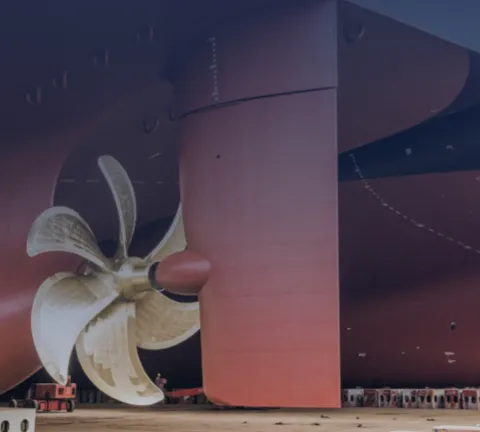
Rudder systems for ships are complete steering systems that convert steering input into course change, manoeuvrability and control within flow, loading and propulsion.
A rudder system comprises the rudder blade, rudder geometry, suspension arrangement, steering system and the hydrodynamic interaction with the ship propeller, propeller nozzle, the variable blade pitch setting of Controllable Pitch Propeller (CPP) blades, the hull and other appendages.
This system interaction determines whether a rudder system builds up steering force predictably, limits energy loss and maintains course control under changing operating conditions. A rudder system can therefore only be assessed properly when flow behaviour, steering response and propulsion behaviour are evaluated together.
Rudder systems are therefore more than steering components: they influence the flow behind the propeller and directly affect control, energy consumption and predictability.
Which Rudder Types Fall Within Rudder Systems?
This assessment covers a broad range of configurations, from twisted rudders, flap rudders, spade rudders, semi-spade rudders and full skeg rudders to dedicated inland shipping rudders. Each rudder type differs in how flow develops around the rudder, how steering force is generated and how loads develop within the configuration.
Across tugboats, workboats, offshore vessels, inland vessels, dredgers, ferries and oceangoing ships, the rudder system can shift from a fixed component into a determining factor within overall vessel behaviour. That role becomes apparent once vessel behaviour and energy consumption no longer correspond with comparable operating conditions.
When Does Rudder System Behaviour Become Technically Inconsistent?
A rudder system no longer functions correctly once steering behaviour, energy consumption and control no longer correspond with the existing installation. Deviations in rudder behaviour rarely appear as one obvious fault. Instead, they emerge through the way a vessel responds, for example through delayed course build-up, an increasing turning circle, instability during steering corrections or higher energy consumption without an immediate technical explanation. Because these signals develop across the system simultaneously, they often remain unnoticed in service for longer than technically desirable.
The decisive moment therefore does not begin with a defect, but at the point where behaviour can no longer be traced back to the existing installation. It must then be determined whether the rudder system still matches the actual operating conditions, or whether behaviour is increasingly determined by a mismatch between flow behaviour, loading and geometry. At that stage, system analysis is no longer an optimization step alone, but a technical necessity.
For technical management, this marks the point where the rudder no longer behaves as a downstream component, but becomes part of both the underlying cause and the eventual solution.
Rudder and Propeller as One Hydrodynamic System Within Rudder Systems
The operation of a rudder system cannot be separated from the propeller. Where present, flow-influencing components such as nozzles or Controllable Pitch Propeller (CPP) blade settings directly affect the flow field around the rudder. Behind the propeller, an accelerated and rotating flow field develops in which substantial energy remains present. The rudder operates directly within this flow and influences how that energy is distributed, dissipated or utilized.
Depending on geometry, profile shape and positioning, the rudder may stabilize the flow and convert rotational energy into effective thrust, or introduce additional resistance when the geometry no longer corresponds with the surrounding flow regime. This interaction determines not only steering response, but also the vessel’s overall energy consumption.
The rudder therefore shifts from a steering component into an integral part of propulsion performance itself. The quality of that interaction is determined by hull, propeller and rudder functioning together as one hydrodynamic system. This technical relationship forms the basis of Technology and Configuration of Rudder Systems, where flow behaviour, inflow conditions and force build-up are examined further.
Why CFD Is Leading in the Assessment of Rudder Systems
Once vessel behaviour can no longer be explained consistently through operational experience, design rules or individual components alone, system-level analysis becomes necessary. Computational Fluid Dynamics (CFD) then becomes the leading method because it is the only method capable of providing insight into the actual flow distribution behind the propeller and around the rudder within the existing configuration.
At that stage, analysis shifts from isolated component behaviour to complete system behaviour. CFD reveals how velocity fields, pressure zones and turbulence develop and how the rudder responds under representative operating conditions. This makes it possible to determine whether a selected rudder type or ship rudder still corresponds with the surrounding flow regime, or whether it introduces disturbances that contribute to resistance, cavitation, energy loss or reduced control.
Within newbuild projects, CFD is used to align rudder, propeller and hull from the earliest design stages onwards. Within retrofit projects, CFD becomes the technical decision point at which modifications in rudder type, profile geometry or positioning are assessed for technical feasibility. On that basis, different rudder concepts can be compared and a ship rudder can be developed as a CFD-optimized rudder specifically matched to the actual flow regime and operational profile. The decision-making process therefore shifts away from assumptions and reference designs towards demonstrable system performance. Further validation of flow behaviour, energy distribution and reproducibility under load is developed within Design, Validation and Performance Assessment of Rudder Systems.
How Do Rudder Types Differ in Flow Behaviour and Loading?
The functional differences between rudder types originate from the way they interact with flow behaviour, generate steering force and transfer loading within the surrounding configuration. Twisted rudders follow the propeller slipstream and utilize the rotational energy already present within the flow. Flap rudders and other high-lift configurations increase effective rudder force and provide additional steering capability, particularly at lower speeds or under limited inflow conditions.
Spade rudders offer direct steering response with relatively low resistance, while semi-spade and full skeg rudders provide additional structural support and robustness under higher loading conditions or intensive operating profiles. Inland shipping rudders and other specialized configurations are adapted to shallow-water operation, variable flow behaviour and application-specific operational restrictions.
The choice between rudder types therefore does not follow from preference or standardization alone, but from the hydrodynamic behaviour required under the given conditions and the extent to which that behaviour remains achievable within the existing or new configuration.
Applicability Across Vessel Types
Because the interaction between rudder, propeller and hull differs across vessel categories, each application requires renewed assessment of the behaviour actually demanded from the system. Tugboats and workboats require maximum control under high loading conditions, offshore vessels require predictable behaviour under variable operating conditions, inland vessels prioritize efficiency within shallow-water restrictions, while oceangoing vessels require stability and energy efficiency across long-distance voyages.
The decisive point therefore does not lie in the vessel type itself, but at the moment where the operational profile no longer corresponds with the existing configuration. At that stage, the rudder system no longer remains a fixed selection, but becomes a variable that must be reassessed. Within that context, rudder systems are analysed, designed and supplied on a project-specific basis for both newbuild and retrofit applications.
Assessment of Rudder Systems Within System Context
A rudder system and the rudders applied within it can only be assessed correctly within the vessel’s total propulsion configuration. Deviations in steering behaviour may emerge at the rudder itself, while the underlying cause originates from inflow conditions, propeller characteristics or operational changes elsewhere within the system.
In service, rudder analysis therefore almost always develops into broader system-level analysis. This prevents technically plausible local solutions from leaving the underlying behaviour unresolved. Only within that wider interaction does it become clear whether the rudder system itself truly forms the limiting factor.
From Analysis Towards Design Direction
Once the rudder system has been identified as a determining factor, the focus shifts from analysis to technical direction. In some cases, the existing design remains functionally viable and optimization focuses on profile geometry, rudder area or positioning. In other situations, rudder geometry or rudder type no longer corresponds structurally with the surrounding flow regime, making modification or replacement of the ship rudder technically necessary.
Integration feasibility within the existing configuration also becomes relevant at that stage, including structural modifications and the operational impact of downtime or installation work.
This assessment extends beyond selecting a rudder type alone. It directly affects the interaction between rudder and propeller, load distribution, skeg and hull interaction, and the way steering forces are generated and transferred through the steering system. As a result, a spectrum of technical pathways emerges, ranging from optimization to fundamental redesign.
The choice between these pathways is determined by the extent to which system behaviour remains reproducible and controllable. Where that coherence disappears, redesign becomes a necessary technical step. Once the same behaviour continues repeating structurally over time, assessment shifts towards Lifecycle, Retrofit and Regulation of Rudder Systems, where technical durability and load development become central.